
Last Updated: October 24, 2026
Managing your money starts with knowing where it goes. Our free monthly budget calculator helps you divide your take-home income into needs, wants, and savings using the popular 50/30/20 budgeting rule.
Whether you want to control everyday expenses, build an emergency fund, or pay down debt, this monthly budget planner gives you a simple starting point. Enter your monthly income after taxes, adjust the percentages to fit your situation, and see how much you could allocate to each category.

Easy to Use Simple, clear, inputs

100% Free No Hidden fees

Instant Results
Plan your money in seconds
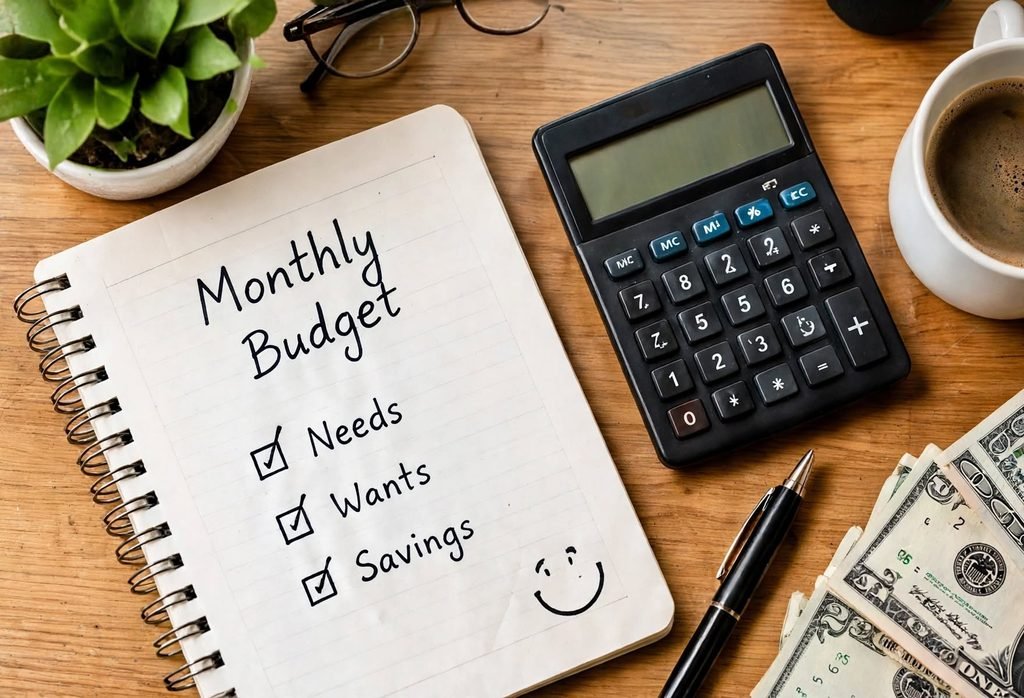
Monthly Budget Calculator
Enter your monthly take-home income to see how your money could be divided using the 50/30/20 rule. You can also customize the percentages to match your financial priorities.
AFFORDABLYUSA · FREE FINANCIAL TOOL
Plan your take-home income using the 50/30/20 rule. Adjust your budget and see your results instantly.
Your Monthly Budget
Enter your monthly take-home income and budget amounts in US dollars.
Planned monthly budget
Optional: actual monthly spending
Actual spending starts at $0. Enter your real amounts to compare them with your planned budget.
Your Budget Breakdown
Your results update when you change the numbers.
Planned vs. Actual Spending
Enter actual spending on the left to compare it with your plan.
| Category | Planned | Actual | Difference |
|---|---|---|---|
| Needs | $2,000.00 | $0.00 | $2,000.00 |
| Wants | $1,200.00 | $0.00 | $1,200.00 |
| Savings | $800.00 | $0.00 | $800.00 |
| Total | $4,000.00 | $0.00 | $4,000.00 |
The 50/30/20 rule is a budgeting guideline, not financial advice. Your ideal percentages may differ depending on your cost of living, financial goals and debt obligations. All amounts are in USD.

The 50/30/20 Rule
A simple and effective way to manage your money: Allocate 50% to needs, 30% to wants, and 20% to savings and debt repayment.
Related Calculators

Savings Goal Calculator
Plan for your future goals and estimate how much you need to save each month.

Grocery Budget Calculator
Estimate your grocery costs and create a monthly food budget that fits your household.
How to Use This Monthly Budget Calculator

Using this monthly budget calculator takes only a few simple steps:
- Enter your monthly take-home income. Use the amount you receive after taxes and payroll deductions, rather than your gross salary.
- Review the suggested budget percentages. The standard 50/30/20 rule allocates 50% to needs, 30% to wants, and 20% to savings and debt repayment.
- Adjust your percentages if necessary. If your housing costs are high or your income changes from month to month, customize the allocations to better reflect your circumstances.
- Review your results. Check the dollar amount assigned to each category and compare it with your actual spending.
- Use the results to plan your next month. Identify expenses you can adjust and decide how much you want to save or put toward debt.
The calculator provides a starting point, not a strict financial rule. Your ideal budget depends on your income, essential expenses, family responsibilities, and goals.
Understanding the 50/30/20 Budget Rule
The 50/30/20 rule is a budgeting method that divides your after-tax income into three main categories: needs, wants, and savings or debt repayment. It can make planning easier by giving every dollar a purpose.


50% for Needs
Needs are essential expenses you generally cannot avoid. These may include:
- Rent or mortgage payments
- Groceries and basic household supplies
- Electricity, water, and other essential utilities
- Health insurance and necessary medical expenses
- Transportation needed for work or essential activities
- Minimum required debt payments
If essential expenses take up more than half of your income, you may need to adjust the other categories. Housing, childcare, transportation, and healthcare costs can make the standard percentages difficult to follow.

30% for Wants
Wants are nonessential expenses that improve your lifestyle but can usually be reduced when money is tight. Examples include:
- Restaurant meals and coffee shops
- Entertainment and streaming subscriptions
- Hobbies and recreational shopping
- Vacations and optional travel
- Upgrades to phones, electronics, or clothing
You do not have to eliminate every enjoyable purchase to manage money well. The goal is to spend intentionally and keep discretionary expenses within a level that works for your situation.

20% for Savings and Debt Repayment
The final category focuses on improving your financial position. Depending on your circumstances, it may include:
- Building an emergency fund
- Saving for a home, car, or another major purchase
- Contributing to retirement accounts
- Making additional payments toward high-interest debt
- Saving for future expenses that do not occur every month
Your priorities may change over time. If you do not yet have emergency savings, building a small cash reserve may be an important first step. If you already have a reserve, you may choose to focus more on retirement savings or debt reduction.
The 50/30/20 rule is a flexible guideline, not a requirement. You can customize the percentages in this monthly budget calculator to reflect your real expenses and financial goals.
Monthly Budget Example: $4,000 Take-Home Income
Suppose your monthly take-home income is $4,000. Using the standard 50/30/20 budget rule, your monthly allocations would look like this:
| Budget Category | Percentage | Monthly Amount |
| Needs | 50% | $2000 |
| Wants | 30% | $1200 |
| Savings and Debt Repayment | 20% | $800 |
| Total | 100% | $4000 |
With this example, you would aim to keep essential expenses within $2,000, discretionary spending within $1,200, and savings or additional debt repayment at $800.
These figures are guidelines rather than spending requirements. If your rent, healthcare, childcare, or other essential expenses exceed $2,000, you may need to reduce discretionary spending or adjust your allocations.
Try entering your own income in the monthly budget calculator above to see how the numbers change. Your personal budget should reflect your actual financial situation, not just an ideal percentage split.
5 Practical Tips for a More Realistic Monthly Budget
1. Track Your Actual Spending
Review your bank statements, bills, receipts, and credit card transactions. Tracking what you really spend helps you build a budget based on facts rather than guesses.
2. Include Irregular Expenses
Car repairs, annual insurance premiums, school supplies, medical bills, and holiday spending can disrupt an otherwise reasonable plan. Estimate these expenses and set money aside each month when possible.
3. Start With Essential Bills
Prioritize housing, utilities, groceries, transportation, healthcare, and required payments. If your income does not cover these expenses comfortably, focus on realistic adjustments instead of forcing yourself to follow the standard 50/30/20 percentages.
4. Automate Savings When Possible
If your budget allows, consider scheduling a regular transfer to a savings account after payday. Start with an amount you can sustain and increase it when your financial circumstances improve.
5. Review Your Budget Every Month
A useful budget changes when your income, expenses, or goals change. Compare your plan with your actual spending at the end of each month, identify what worked, and make adjustments for the next month.
For more guidance, read the official Consumer.gov guide to making a budget, which explains how to list income and expenses and use that information to plan your money.
Explore More Budgeting Tools
Ready to take the next step toward better money management? Explore these related tools and guides from AffordablyUSA.

Savings Goal Calculator — Calculate how much you may need to save each month to reach a financial goal.

Grocery Budget Calculator — Estimate your grocery spending and plan a food budget that fits your household.

How to Create a Monthly Budget That Actually Works — Learn how to organize expenses, set realistic spending limits, and build a practical monthly plan.

How to Build an Emergency Fund on a Low Income — Explore practical ways to start saving for unexpected expenses.
For additional budgeting guidance, visit these trusted resources:
Frequently Asked Questions
A monthly budget calculator is a tool that helps you organize your take-home income into spending and savings categories. This calculator uses the 50/30/20 rule as a starting point, dividing income into needs, wants, and savings or debt repayment.
The 50/30/20 rule suggests allocating 50% of after-tax income to needs, 30% to wants, and 20% to savings and debt repayment. You can adjust these percentages when your essential expenses or financial goals require a different approach.
Use your monthly take-home pay, which is the money available after taxes and payroll deductions. Using gross income can make your budget appear larger than the amount you can actually spend.
You can customize the percentages to reflect your situation. Review essential expenses for possible savings, but do not ignore necessary costs just to meet a recommended ratio. Housing, healthcare, childcare, and transportation costs can vary significantly.
Minimum required debt payments are generally treated as essential obligations in the needs category. Additional debt repayment can be included in the savings and debt repayment category. Be consistent in how you categorize payments so you do not count the same amount twice.
Yes. If your income varies, estimate a realistic monthly amount based on your recent earnings and financial records. For a more cautious plan, use a conservative estimate and adjust your budget when you know how much you have actually received.
No. It is a general budgeting guideline, not a universal formula. Your location, household size, debt obligations, income, and goals all affect what makes a realistic budget. Use the calculator as a starting point and adapt the results to your needs.
The amount depends on your income, essential expenses, existing savings, debt, and goals. The 50/30/20 rule suggests allocating 20% of take-home income to savings and debt repayment combined, but a smaller sustainable amount may be more realistic when money is tight. Review your budget regularly as your circumstances change.

Disclaimer
The AffordablyUSA Monthly Budget Calculator is provided for educational and informational purposes only. Its results are estimates based on the income and percentages you enter. The 50/30/20 budgeting rule is a general guideline, not a guarantee that a particular budget will meet your financial needs.
This tool does not provide personalized financial, tax, investment, or legal advice. Always consider your own circumstances when making financial decisions.

Start Building a Budget That Works for You
A clear budget can help you understand your spending, plan for upcoming expenses, and work toward your financial goals. Use our free monthly budget calculator to create your starting plan, then review and adjust it as your circumstances change. Small, consistent steps can make managing your money easier over time.