
AFFORDABLYUSA • SMART MONEY TOOLS
Last Updated: October 25, 2026
Want to build an emergency fund, plan a vacation, save for a car, or prepare for a major purchase? A clear savings target can help you turn a big expense into manageable steps. Use our free savings goal calculator to estimate how much you need to save each week, every two weeks, or each month to reach your goal by a date that works for you. Our savings goal calculator helps you break down your target into weekly, bi-weekly, or monthly amounts.
Enter your target amount, your current savings, and your deadline. You will get a simple contribution estimate you can use to build a plan around your real budget.
✓ Free to use ✓ Simple estimates ✓ No sign-up required
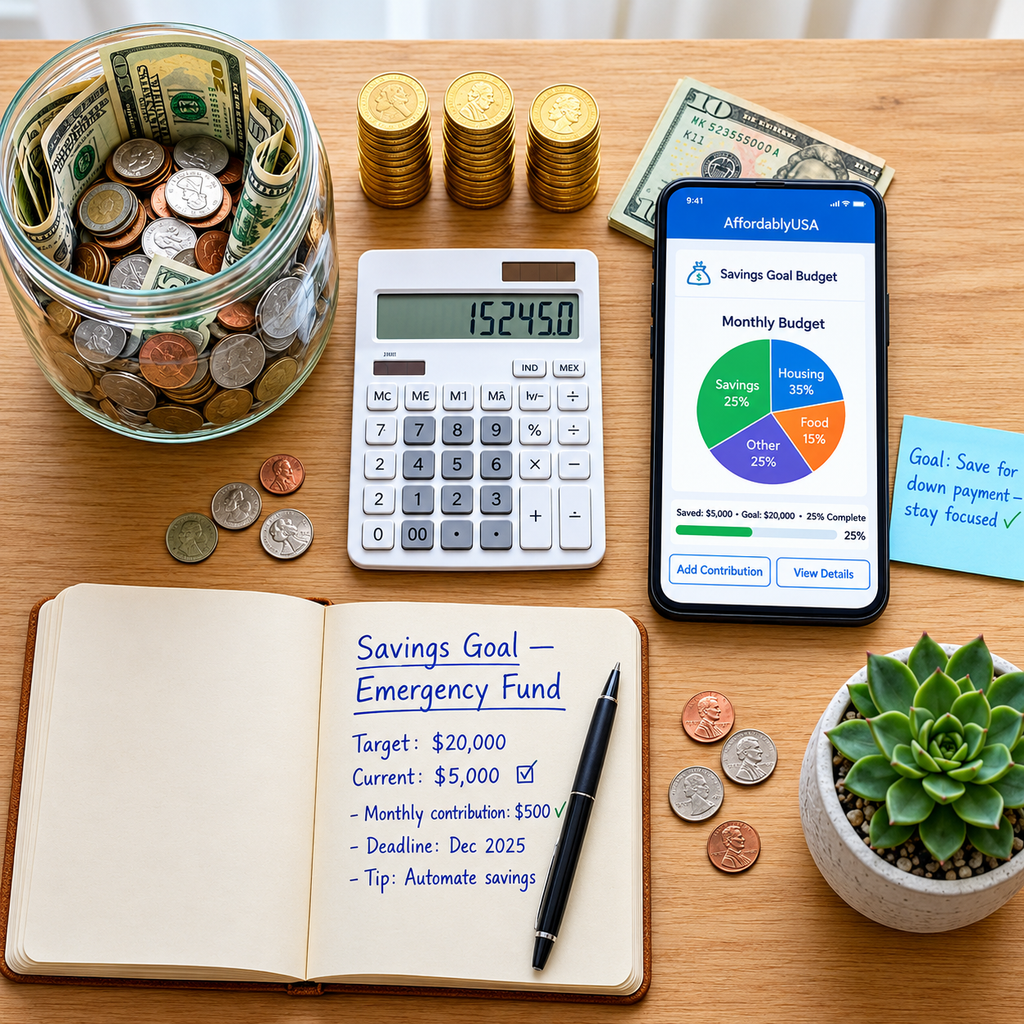
How Much Do You Need to Save? – Savings Goal Calculator Estimate
This savings target calculator estimates the regular contribution needed to reach your goal. It subtracts what you have already saved from your target and spreads the remaining amount over the time available. Choose the contribution frequency that best matches your pay schedule.
The estimate assumes no interest or investment returns. That keeps the calculation straightforward and helps you plan without depending on uncertain growth.
Savings Goal Calculator
Find out how much to save each week or month to reach your financial goal.
Your Savings Plan
You have saved 10% of your goal.
Estimates exclude interest, fees, taxes, and investment returns.
How Does a Savings Goal Calculator Work?
A savings goal calculator estimates the regular contributions needed to reach a specific amount within a chosen period. Instead of guessing how much to save, you can use your target and deadline to create a clearer plan.
To get an estimate, you generally need three pieces of information:
- Savings goal: The total amount you want to accumulate.
- Current savings: The amount you have already set aside for that goal.
- Target date: The date by which you want to reach your goal.
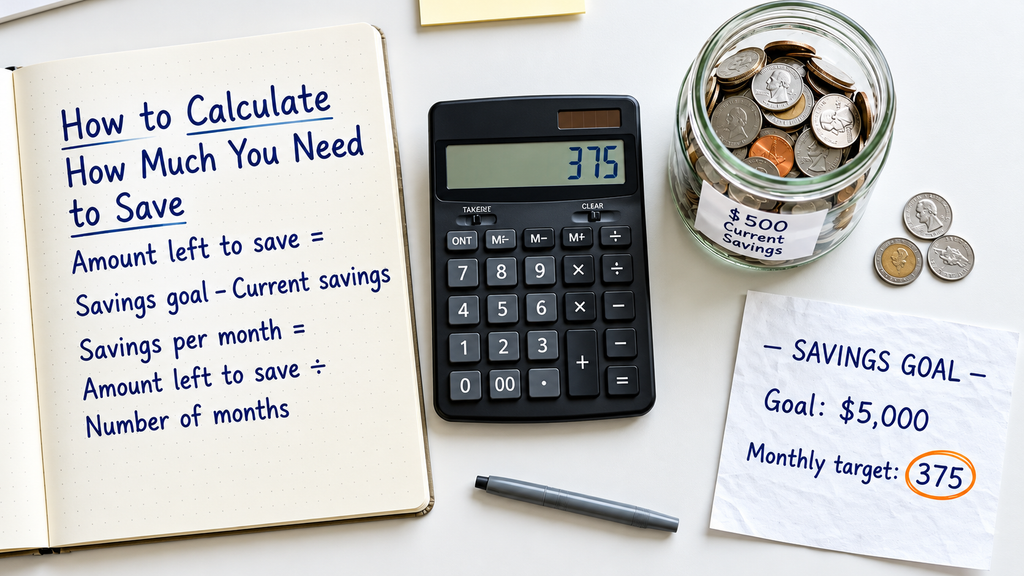
How to Calculate How Much You Need to Save
You can estimate your savings target with a simple formula:

The 2-Step Formula
Worked example
For example, suppose your goal is to save $5,000 in 12 months and you already have $500 saved. Here is how the numbers break down:
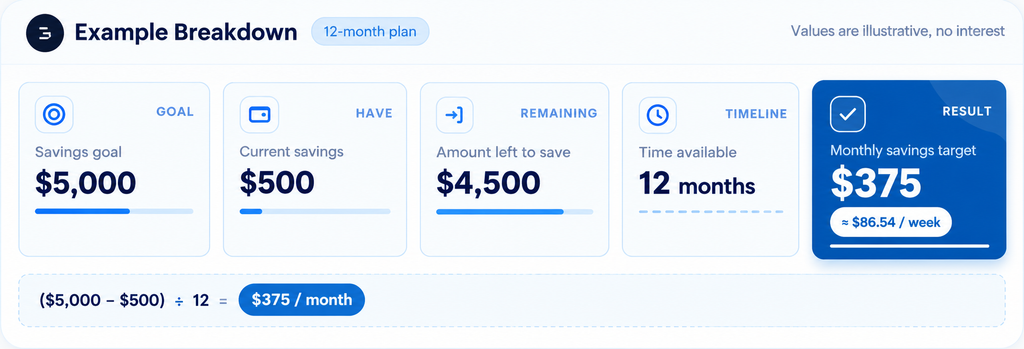
Note: Based on the example above
In this example, you would need to save approximately $375 per month to reach your goal in one year, assuming no interest or additional fees. Your weekly target will depend on the number of weeks remaining. For a quick estimate, divide the remaining amount by the number of weeks in your timeline.
Savings Goal Calculator Examples
Different goals require different savings plans. The examples below show how a savings goal calculator can help you estimate the amount to set aside.
| Savings goal | Current savings | Time available | Amount to save monthly |
| $1,200 emergency fund | $0 | 12 months | $100 |
| $3,000 vacation | $500 | 10 months | $250 |
| $5,000 car fund | $1000 | 12 months | $333.33 |
| $10,000 down payment fund | $1000 | 24 months | $333.33 |
How to Set a Realistic Savings Goal
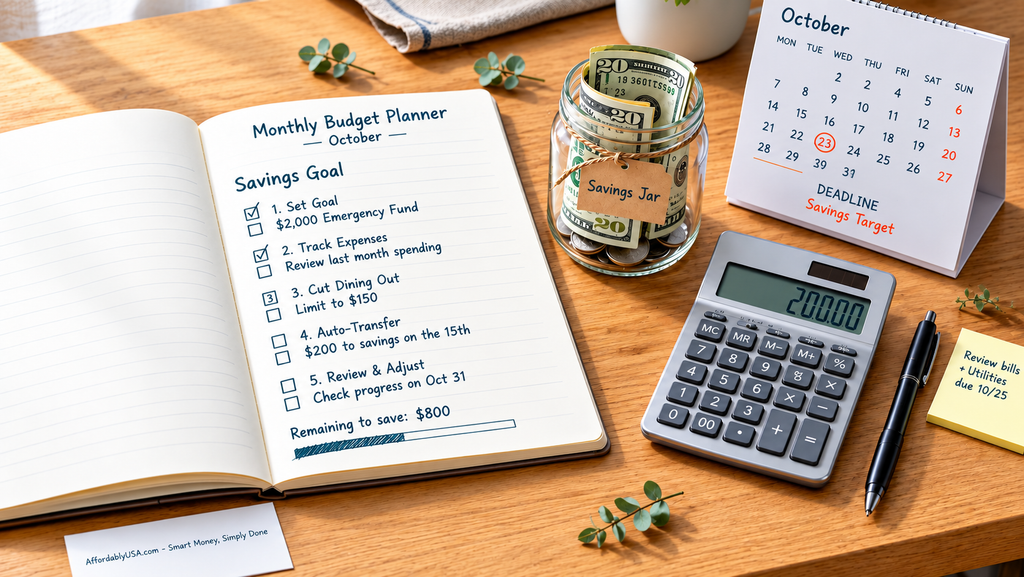
A useful savings goal should be specific, measurable, and realistic for your financial situation. You do not need to start with a large amount. A manageable plan that you can maintain consistently may be more useful than an ambitious target that puts pressure on your essential expenses.
1. Define Your Goal
2. Set a Deadline
3. Review Your Budget
4. Automate Savings
5. Track Your Progress
What Can You Save For?
A savings goal calculator can help you plan for short-term purchases and longer-term financial priorities.

Vacation or Travel
Estimate transport, accommodation, meals, activities, and a reasonable buffer. Setting the budget before booking can help keep travel costs under control.

Car or Transportation
Include the down payment or purchase price plus likely costs such as registration, insurance, fuel, and maintenance where appropriate.

Home Down Payment
Set a target based on your home-buying plan and remember that closing costs, moving, and initial repairs may require separate funds.

Emergency Fund
A cash reserve can help you manage unexpected expenses without immediately relying on credit. Start with a reachable milestone and build over time. Read our upcoming guide: How to Build an Emergency Fund on a Low Income.

Education
Plan for tuition, supplies, equipment, transport, and other costs relevant to your course or training program.

Large Purchase
For furniture, appliances, or other major purchases, compare the full cost and timeline before deciding on a monthly target.
Is It Better to Save Weekly or Monthly?
Neither method is automatically better for everyone. The most useful schedule is one you can maintain while keeping essential bills covered.
Weekly savings
Weekly deposits may feel manageable if you are paid weekly or prefer smaller, frequent steps. Multiply a weekly contribution by about 52 to estimate a full year of deposits.
Monthly savings
Monthly contributions can be easy to coordinate with rent, utilities, and a monthly budget. They may suit people who receive income monthly or prefer to review their finances once a month.
Every-two-week savings
If your pay arrives every two weeks, contributing from each paycheck can create a repeatable habit. There are generally 26 biweekly periods in a year, although your personal cash flow should determine the amount.
How to Reach Your Savings Goal Faster
If you want to reach your target sooner, consider these practical strategies:
- Review recurring expenses: Check subscriptions, phone plans, insurance costs, and other recurring bills for services you no longer need or less expensive alternatives.
- Save extra income: Consider putting part of a tax refund, work bonus, gift, or other unexpected income toward your goal.
- Separate your savings: A dedicated savings account can make it easier to track progress and avoid spending money intended for a specific purpose.
- Increase contributions gradually: If your budget allows, add a small amount to your regular savings contribution when your income increases or an expense decreases.
- Keep the goal visible: Write down the target amount, deadline, and current balance so you can see how far you have progressed.
For more practical guidance, explore the FDIC’s savings strategies and the Consumer Financial Protection Bureau’s money-management resources.
What If You Cannot Afford the Suggested Amount?
If the calculator gives you a monthly savings amount that does not fit your budget, that does not mean you have failed. It means the current target and deadline may need to be adjusted.

- Extend the deadline: More time generally means a lower regular contribution.
- Choose a starter target: Save a smaller amount first, then set the next milestone.
- Reduce the goal cost: Compare alternatives or remove optional extras if appropriate.
- Review the budget: Identify spending changes that do not compromise essentials.
- Recalculate after changes: Use your updated target and deadline to make a fresh plan.
Related Budget Calculators and Guides
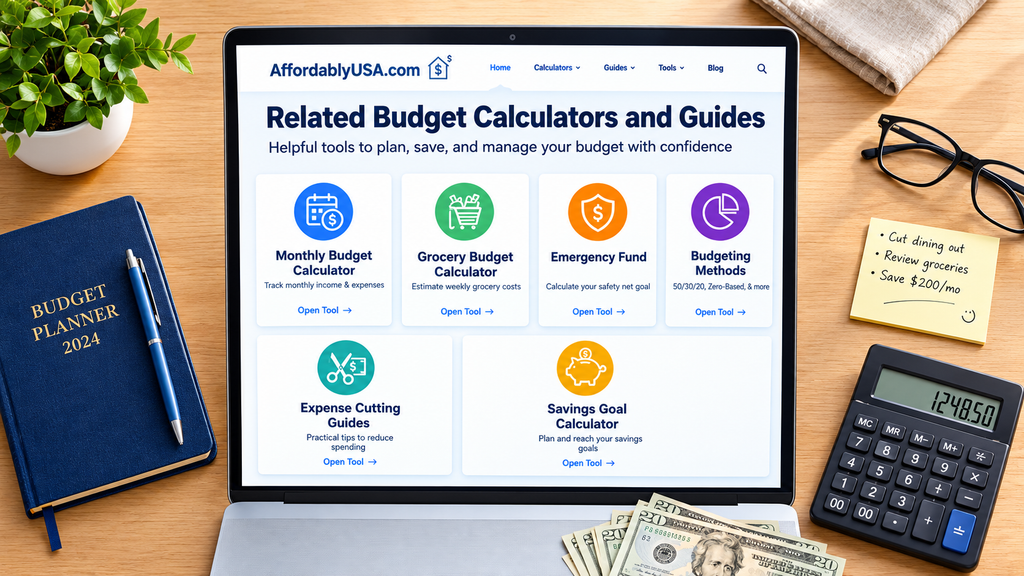
Your savings target is easier to manage when it fits your overall budget. Use these tools and guides to review your monthly income, everyday spending, and possible ways to make room for savings.
1. Monthly Budget Calculator
Organize needs, wants, and savings into a monthly plan.
2. Grocery Budget Calculator
Estimate grocery spending and plan food costs.
3. How to Create a Monthly Budget That Actually Works
Build a practical budget you can maintain.
4. How Much Should You Spend on Groceries Per Month?
Understand and plan your grocery costs.
5. How to Build an Emergency Fund on a Low Income
Start building a cushion with a manageable plan.
6. Best Budgeting Methods for Beginners
Compare 50/30/20, zero-based budgeting, and more.
7. How to Cut Monthly Expenses Without Sacrificing Essentials
Look for savings without neglecting basic needs.
Frequently Asked Questions
A savings goal calculator estimates how much you need to save regularly to reach a target amount by a chosen date. Depending on its features, it may calculate weekly or monthly contributions and account for current savings or interest.
The amount depends on your target, current savings, deadline, and budget. Subtract what you have already saved from your goal, then divide the remaining amount by the number of months available. Make sure the result fits your essential expenses and other financial obligations.
Subtract your current savings from your target amount, then divide the difference by the number of weeks remaining until your deadline. This simple estimate assumes no interest or fees.
Yes, although the timeline may need to be longer. Start with an amount you can afford consistently, review your spending, and increase contributions when your circumstances allow. Even small, regular deposits can help build savings over time.
Consider the urgency of your needs, the stability of your income, and any upcoming expenses. Building some emergency savings can help you manage unexpected costs, while planned purchases may have a fixed deadline. Your priorities should reflect your own financial situation.
The result depends on the calculator’s features and the inputs you provide. If an interest-rate field is available, check whether the estimate accounts for interest and how it treats contribution timing. If interest is not included, the result is a simple savings estimate.
Recalculate the remaining amount using your current savings balance and the time left. You may need to increase future contributions or extend the deadline. Avoid putting essential bills or necessary expenses at risk to catch up.
Consider an account that provides suitable access to your money, clear fees, and appropriate deposit protection. In the United States, check whether a bank is FDIC-insured or a credit union is federally insured. Review the account’s terms before opening it.
Yes. The AffordablyUSA savings goal calculator is intended as a free planning tool. Use it to estimate your savings target and adjust your plan as your circumstances change.
Start Working Toward Your Savings Goal Today
You do not need a perfect plan to begin. Start with a clear target, choose a realistic timeline, and set aside an amount that fits your budget. Check your progress regularly and adjust your plan as life changes.
Disclaimer: AffordablyUSA provides educational calculators and general information, not personalized financial, tax, or investment advice. Calculator results are estimates and may not reflect interest, fees, taxes, or changes in your circumstances. Review financial products carefully and consider qualified professional guidance when needed.