
Last Updated: November 01, 2026
Household appliances make everyday life easier, but they also contribute to your monthly electricity bill. Refrigerators, washing machines, dryers, televisions, air conditioners, dishwashers, and kitchen equipment all consume energy. However, the cost of operating each appliance depends on more than its power rating. How long you use it, how often it runs, and your electricity rate all matter.
Our appliance energy cost calculator helps you estimate how much an individual household appliance costs to operate. Enter its wattage, daily usage hours, number of operating days per week, and electricity rate to estimate daily, monthly, and annual energy consumption and running costs.

Whether you want to understand which devices use more electricity, compare appliances, or find opportunities to reduce household expenses, this calculator gives you a practical way to examine your energy use.
Appliance Energy Cost Calculator
Calculate how much your household appliances cost to run every day, month, and year.
Appliance Details
Based on your appliance usage
Daily kWh = (Watts × Hours per Day ÷ 1,000) × Days per Week ÷ 7
Monthly kWh = Annual kWh ÷ 12
Running Cost = Energy Consumption (kWh) × Electricity Rate
What Is an Appliance Energy Cost Calculator?
An appliance energy cost calculator is a tool that estimates the electricity consumption and operating cost of a specific electrical device.
The calculation uses the appliance’s power rating, usually measured in watts (W), and the amount of time it operates. The resulting energy consumption is converted into kilowatt-hours (kWh), the unit commonly used by electric utilities to measure household electricity usage.
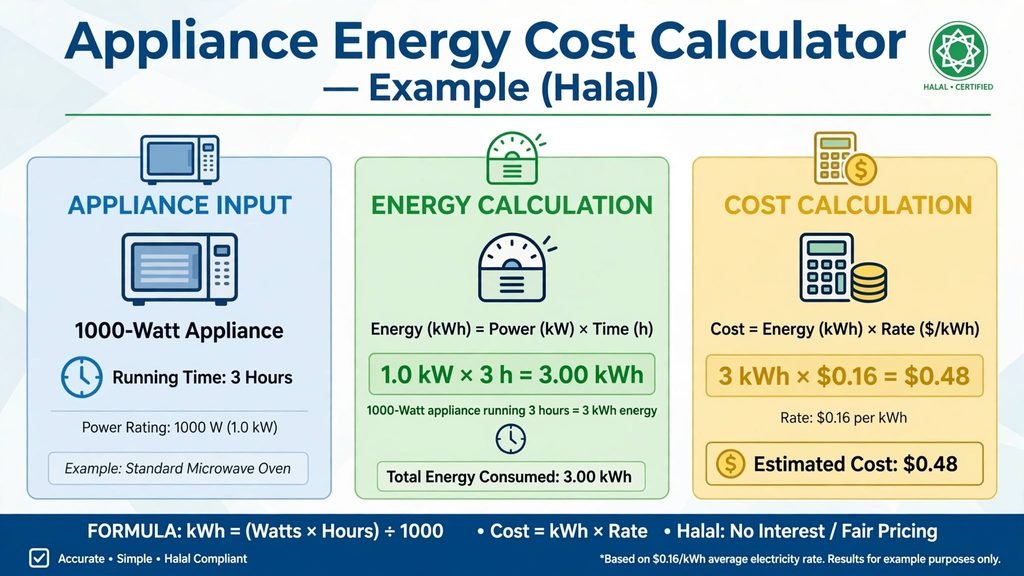
For example, a 1,000-watt appliance operating for three hours uses approximately 3 kWh of electricity.
If your electricity rate is 16 cents per kWh, the estimated cost for those three hours is:
3 kWh × $0.16 = $0.48
The appliance energy cost calculator applies this principle to your selected usage schedule and estimates costs over longer periods.
How to Use the Appliance Energy Cost Calculator
You can enter a name such as refrigerator, television, washing machine, electric heater, or air conditioner into the appliance energy cost calculator. This field is optional and helps identify the appliance in your calculations. The calculator is designed to make appliance energy estimates simple. Follow these steps to get your results.
1. Enter the Appliance Name
You can enter a name such as refrigerator, television, washing machine, electric heater, or air conditioner. This field is optional and helps identify the appliance in your calculations.
2. Enter the Appliance Wattage
Find the power rating on the appliance label, in its user manual, or in the manufacturer’s product specifications.
The rating is usually displayed in watts (W). For example:
- A 100-watt device uses 0.1 kilowatts while operating at that power.
- A 500-watt appliance uses 0.5 kilowatts.
- A 1,500-watt appliance uses 1.5 kilowatts.
If the appliance label shows kilowatts instead of watts, multiply the kW figure by 1,000 to convert it into watts.
3. Enter Daily Usage Hours
Estimate how many hours the appliance operates on a typical day when it is used.
For example, a television might operate for four hours per day, while a small kitchen appliance might only run for 15 minutes.
For a device used for 15 minutes, enter 0.25 hours.
4. Select Days of Use per Week
Enter the number of days the appliance operates during a typical week.
A refrigerator may operate seven days per week, while a washing machine might be used three or four days per week.
5. Enter Your Electricity Rate
Find your electricity price on your latest utility bill. The calculator accepts the rate in cents per kWh.
For example, enter 16 if your electricity rate is 16 cents per kWh.
6. Enter the Number of Appliances
If you operate several identical devices, enter their quantity. For example, if you have three identical fans, you can calculate their combined estimated consumption and cost.
7. Review Your Results
The calculator estimates daily, monthly, and annual electricity consumption and operating costs. You can change any input to see how different usage patterns affect the results.
How to Calculate Appliance Electricity Consumption
The basic formula is:
Daily Energy Consumption (kWh) = (Wattage × Hours Used per Day) ÷ 1,000
To account for appliances that are not used every day, the weekly usage schedule is included:
Average Daily Consumption = Daily kWh × Days Used per Week ÷ 7
Then:
Annual Consumption = Average Daily Consumption × 365
Monthly Consumption = Annual Consumption ÷ 12
To estimate operating costs:
Electricity Cost = Energy Consumption (kWh) × Electricity Rate ($/kWh)
For multiple identical appliances, multiply the result by the number of units.
Calculation Example
Suppose you use a 1,200-watt appliance for two hours per day, five days per week. Your electricity rate is 15 cents per kWh.
First, convert watts into kilowatts:
1,200 ÷ 1,000 = 1.2 kW
Daily consumption on a day of use:
1.2 × 2 = 2.4 kWh
Average daily consumption across the full week:
2.4 × 5 ÷ 7 = 1.714 kWh
Estimated monthly consumption:
1.714 × 365 ÷ 12 = approximately 52.14 kWh
Estimated monthly cost:
52.14 × $0.15 = approximately $7.82
This is an estimate based on the usage schedule and assumed power consumption.
Why Appliance Wattage Matters
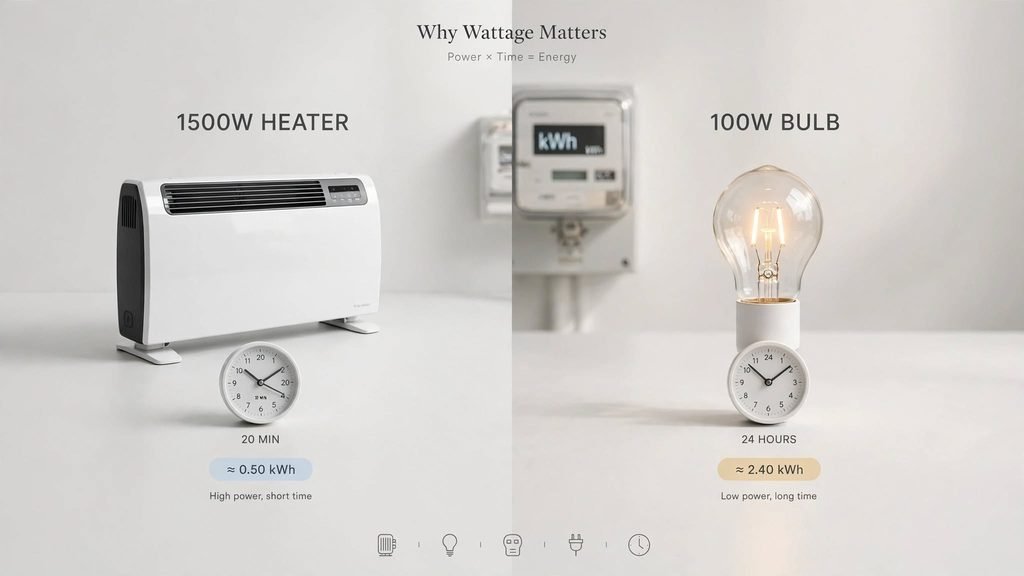
Wattage describes the rate at which an appliance uses electrical power while operating. A device with a higher wattage generally consumes more energy than a lower-wattage device when both run for the same amount of time.
However, wattage alone does not determine the total electricity cost.
For example, a 1,500-watt appliance used for 20 minutes may consume less energy than a 100-watt device operating continuously for an entire day.
That is why the appliance energy cost calculator considers both power and operating time instead of comparing wattage alone, giving you a more accurate estimate.
You can learn more about estimating household appliance energy use through the U.S. Department of Energy’s guide: Estimating Appliance and Home Electronic Energy Use.
Which Household Appliances Can You Calculate?
You can use this calculator for many household electrical devices, including:
Refrigerators and Freezers
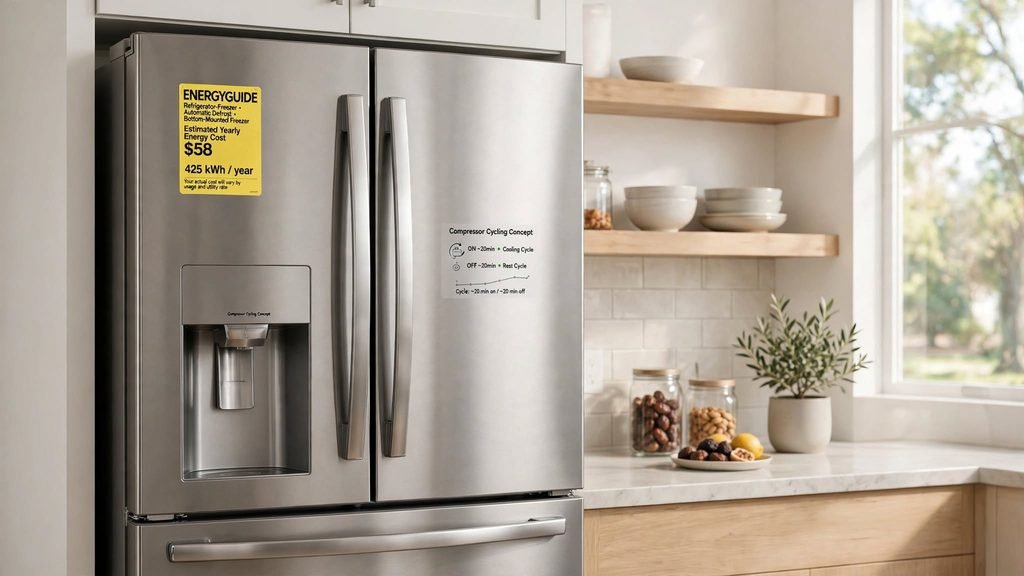
Refrigerators and freezers operate throughout the day, but their compressors cycle on and off. Their actual average electricity consumption is therefore not necessarily equal to their maximum rated wattage multiplied by 24 hours.
For these appliances, use the annual kWh figure on the product’s EnergyGuide label when available, or use measured energy consumption for a more reliable estimate.
Washing Machines and Dryers
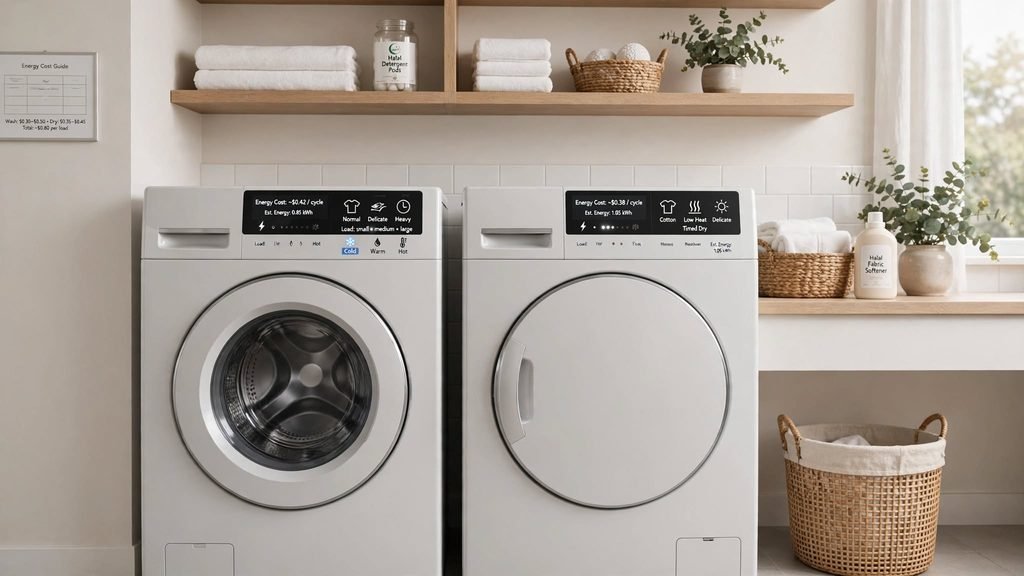
Washing machines and dryers operate in cycles. Their energy consumption can vary depending on load size, water temperature, drying settings, and cycle selection.
For a better estimate, use the energy consumption information supplied by the manufacturer or an appropriate energy measurement device.

Air Conditioners and Heaters
Heating and cooling equipment can have a substantial effect on household electricity use. Actual consumption depends on equipment efficiency, room conditions, thermostat settings, outdoor temperature, and operating time.
For additional guidance, read our upcoming article: How to Choose an Energy-Efficient Air Conditioner for Your Home.
Televisions, Computers, and Electronics
Entertainment devices and computers have different power ratings and usage patterns. Some continue to consume a small amount of electricity in standby mode.
If standby consumption is important to your estimate, measure it separately or consult the manufacturer’s technical specifications.


Kitchen Appliances
Microwaves, coffee makers, kettles, ovens, and other kitchen devices may have relatively high power ratings but are often used for short periods. Their total energy consumption depends on the duration and frequency of use.
What Makes Actual Appliance Energy Use Different?
The appliance energy cost calculator provides an estimate, but actual energy consumption can vary for several reasons. The appliance energy cost calculator provides an estimate, but actual energy consumption can vary for several reasons.
Operating cycles: Many appliances do not consume their full rated power continuously. Refrigerators, air conditioners, and thermostatically controlled equipment switch between operating states.
Usage habits: Longer operating times, more frequent cycles, and higher settings can increase energy consumption.
Appliance condition: Maintenance, blocked filters, damaged components, and poor ventilation may affect how efficiently certain appliances operate.
Standby power: Some electronics use electricity even when they appear to be switched off. The calculator does not automatically include this additional consumption.
Electricity pricing: Your provider may charge different rates depending on the time of day, season, or pricing plan. A single rate provides an estimate rather than a complete calculation for every tariff.
How to Reduce Appliance Electricity Costs
You can manage appliance energy costs through practical changes.
- Turn off devices when they are not needed.
- Use energy-saving modes where appropriate.
- Avoid running washing machines or dishwashers with very small loads when a full load is practical.
- Clean appliance filters according to the manufacturer’s instructions.
- Keep refrigerator and freezer doors closed as much as possible.
- Compare the annual energy consumption of appliances before buying replacements.
- Choose appropriately sized equipment for your household needs.
- Check whether electronics consume electricity in standby mode.
- Use heating and cooling equipment efficiently.
- Review your electricity bill regularly to understand changes in consumption.
You can also use our Electricity Cost Calculator to estimate your overall household electricity expenses.
For more practical suggestions, see How to Lower Your Electricity Bill Without Sacrificing Comfort and 12 Simple Energy-Saving Habits for American Households.
How to Compare Appliance Energy Efficiency
When purchasing a new appliance, do not compare products using wattage alone. Look for standardized energy information and compare products with similar capacity, size, and features.
In the United States, the yellow EnergyGuide label provides estimated annual energy consumption or operating-cost information for covered products. It can help consumers compare similar models.
The Federal Trade Commission explains how these labels work in its EnergyGuide Labeling FAQs.
You can also explore ENERGY STAR to find information about energy-efficient products and certified appliances.
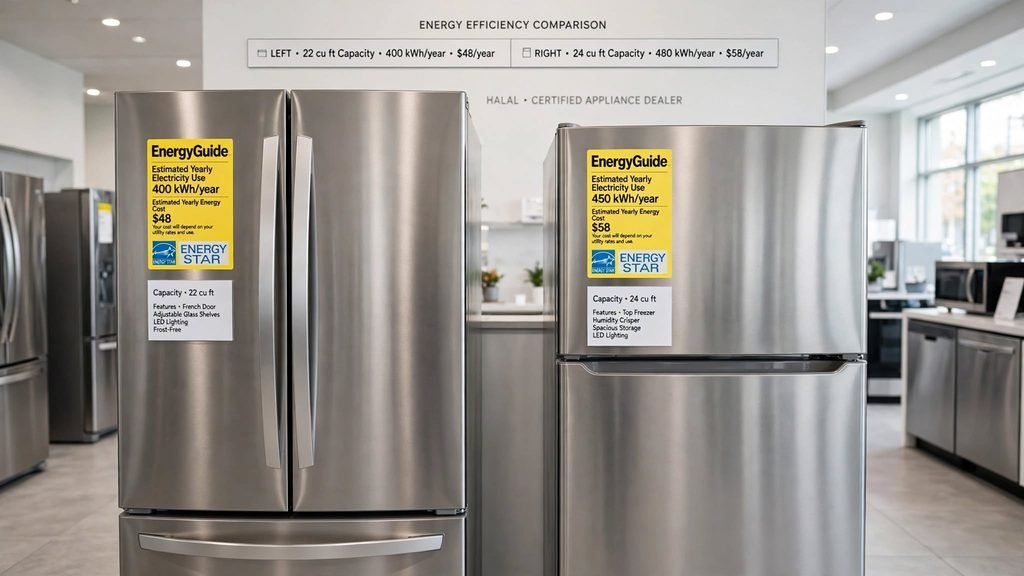
A more efficient appliance may cost more initially, so consider both the purchase price and estimated operating costs over the expected life of the product.
Final Thoughts
Knowing how much individual appliances cost to operate can help you understand your household electricity consumption and make better energy decisions.
Our appliance energy cost calculator makes it easier to estimate daily, monthly, and annual running costs using wattage, operating hours, usage days, and electricity rates.
For the most useful results, check the appliance’s actual energy information, use a realistic operating schedule, and update your electricity rate when it changes. You can then compare individual appliances with your overall household expenses and identify opportunities to use energy more efficiently.
Frequently Asked Questions
Multiply the appliance’s wattage by its operating hours, divide by 1,000 to get kWh, and multiply the energy consumption by your electricity rate. Adjust the calculation for the number of days the appliance is used.
You need the appliance’s wattage, daily operating hours, number of usage days per week, and electricity price per kWh. The number of identical appliances is also useful when calculating combined costs.
A 1,000-watt appliance operating at its rated power for one hour uses 1 kWh of electricity.
Not necessarily. Operating time matters too. A high-wattage appliance used briefly may consume less electricity than a low-wattage device that runs continuously.
Yes. Enter the number of identical appliances to estimate their combined energy consumption and operating cost. For different appliances, calculate each one separately and add the results.
No. It is an estimate based on your inputs and an average month calculated from the annual usage estimate. Actual costs may vary with operating cycles, standby power, seasonal usage, and electricity pricing.
Check the product label, user manual, or manufacturer’s specifications. Some appliances display amperage and voltage instead of watts. In that case, the power calculation may require additional electrical information.
Yes, but using its maximum rated wattage and 24 hours of operation may overestimate consumption because the compressor cycles on and off. An annual kWh figure from its EnergyGuide information or a suitable energy meter is usually more useful.
No. The calculator estimates energy use from the operating hours and wattage you enter. Standby consumption should be measured or estimated separately and added to the result.
Kilowatts (kW) measure electrical power, while kilowatt-hours (kWh) measure energy consumed over time. An appliance using 1 kW for two hours consumes 2 kWh.