
Last Updated: November 02, 2026
Moving to a new home can be exciting, but the expenses involved can quickly add up. Whether you are relocating to a nearby apartment or moving across the United States, understanding your expected costs can help you plan your budget and avoid unnecessary surprises. Our moving cost calculator helps you organize the major expenses associated with relocating and estimate how much money you may need for moving day.
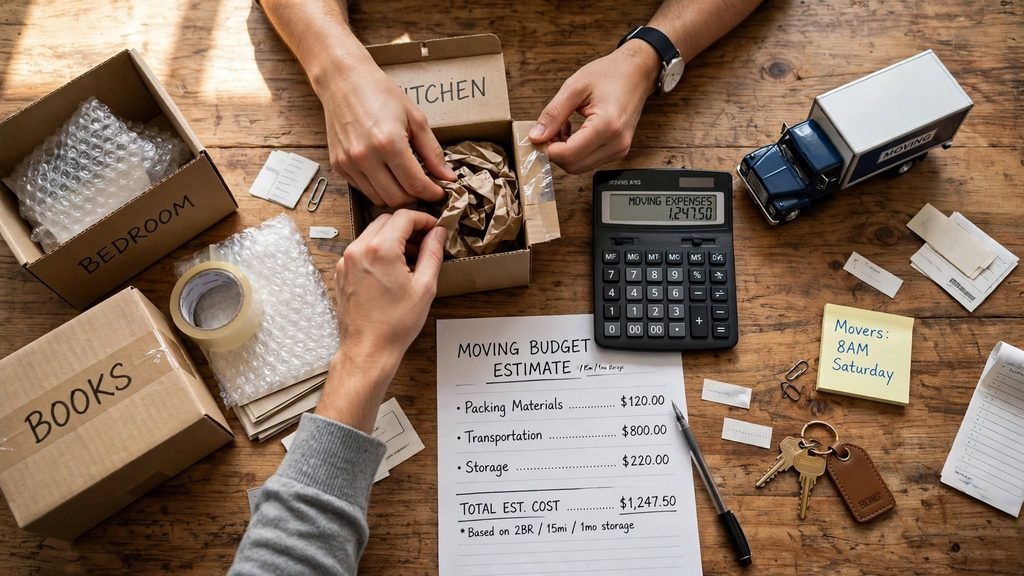
Instead of considering only the price of a moving truck or professional movers, it is important to account for packing materials, transportation, storage, cleaning, and other expenses. By estimating these costs before your move, you can compare different options and make more informed decisions.
Moving Cost Calculator
Estimate your moving expenses and build a practical relocation budget.
What Is a Moving Cost Calculator?
A moving cost calculator is a budgeting tool that helps you estimate the total expenses of moving from your current home to a new one. It brings different cost categories together so you can see how much your relocation may cost.
Moving expenses vary depending on the distance, size of your home, quantity of belongings, services required, and timing of your move. A local apartment move may require a truck rental and a few hours of labor, while a long-distance household relocation may involve transportation, professional packing, storage, and additional travel expenses.
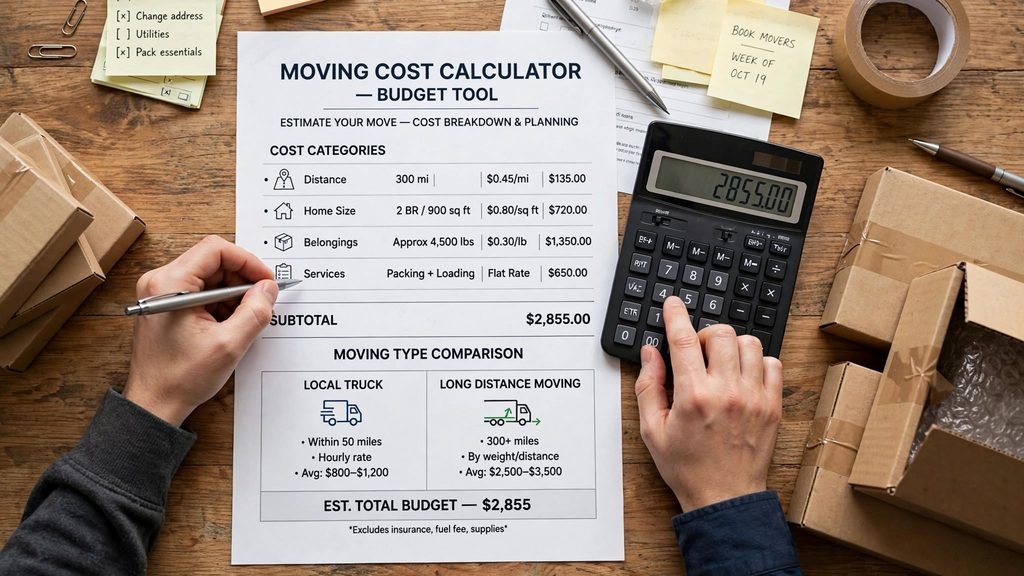
Our moving cost calculator allows you to enter your expected expenses and calculate an estimated total. You can adjust individual amounts as you receive quotes or make changes to your moving plan.
The result is a practical starting point for creating a realistic moving budget. It is an estimate based on the information you provide, not a guaranteed price from a moving company.
How to Use the Moving Cost Calculator
Using the calculator is straightforward. Start by entering the estimated costs you already know, then add the expenses you expect to pay before, during, and after your move.
- Enter your moving service or transportation cost. Add the quote from a professional moving company or the amount you expect to spend on a rental truck.
- Estimate labor expenses. Include loading and unloading assistance if you plan to hire movers or independent labor.
- Add packing materials. Account for boxes, tape, protective wrap, labels, and other supplies.
- Include transportation expenses. Consider fuel, mileage charges, tolls, parking, and other travel costs that apply to your move.
- Add extra expenses. Include storage, temporary accommodation, cleaning, utility setup, or other relocation costs.
- Set a contingency amount. A small reserve can help you prepare for unexpected expenses.
- Calculate your estimated total. Review the result and update the amounts when you receive more accurate quotes.
For a useful estimate, avoid entering the same expense in multiple categories. For example, if your moving company quote already includes packing materials or transportation, do not add those costs again unless they are excluded from the quote.
What Factors Affect Moving Costs?
Several factors determine how much you may spend when moving. Understanding them can help you identify opportunities to reduce expenses.
1. Distance Between Homes
Distance is an important factor in many relocations. A local move may involve a short truck rental and limited travel expenses. A long-distance move can require more fuel, additional driving time, overnight accommodation, or a transportation charge based on the shipment and service agreement.
However, distance alone does not determine the final price. The size of your shipment, pickup and delivery conditions, and the services you request may also affect the quote.
2. Size of Your Home
Moving from a studio apartment generally involves fewer belongings than relocating from a four-bedroom house. Larger households may need a bigger truck, more labor, additional packing materials, and more time for loading and unloading.
Before requesting estimates, make an inventory of your furniture, appliances, boxes, and other items. Removing things you no longer need may reduce the volume of belongings you transport.
3. Professional Movers or DIY Moving
Hiring professional movers can reduce the physical work involved in relocating. Depending on the agreement, the service may include loading, transportation, unloading, and optional packing.
A do-it-yourself move may involve renting a truck, purchasing supplies, paying for fuel, and arranging help. It can be a suitable option for some smaller moves, but you should consider the complete cost rather than comparing the rental price alone.
Use the moving cost calculator to compare the expenses you expect under each option. Enter all applicable charges for one plan, calculate the total, and then repeat the process with the alternative plan.
4. Packing and Special Handling
Boxes and basic packing materials can seem inexpensive individually, but the total can grow when you need supplies for an entire household. Fragile items, large furniture, electronics, and valuable possessions may require extra protection or specialized handling.
Ask movers which packing services are included in their quotes. If you pack yourself, prepare a supply list and estimate the quantity you need before purchasing materials.
5. Timing and Access Conditions
Moving dates can affect availability and pricing. Busy periods may offer fewer scheduling choices, so comparing dates can be helpful when your schedule is flexible.
Access conditions can also affect the work involved. Stairs, elevators, long carrying distances, limited parking, and difficult loading areas may require additional time or services. Explain these conditions when requesting a quote so the estimate reflects your actual move as closely as possible.
How to Build a Realistic Moving Budget
A good moving budget includes more than the main transportation charge. Separate expenses into clear categories to make the total easier to review.
Transportation: Include a moving company quote or truck rental, fuel, mileage charges, tolls, and parking where applicable.
Labor: Add loading, unloading, packing assistance, or furniture assembly if these services are not already included in another charge.
Packing supplies: Budget for boxes, tape, labels, protective wrapping, and any specialized materials you need.
Storage and travel: If your new home is not immediately available, you may need temporary storage or accommodation. Include only the expenses relevant to your circumstances.
Home-related expenses: Consider cleaning, minor repairs, utility setup, and other move-related costs that may arise around your move date.
Contingency reserve: Keep a separate allowance for unexpected costs. The appropriate amount depends on how certain your estimates are and how much flexibility you have in your budget.
Once these categories are listed, use the moving cost calculator to combine your estimates. Revisit the calculation whenever a quote changes or you add a service.
How to Save Money When Moving
You do not necessarily need to choose the cheapest service to control your moving expenses. The goal is to find a plan that fits your budget and provides the services you actually need.
Start by comparing written estimates from several reputable movers. Make sure each quote covers similar services so that you are comparing equivalent options. For interstate moves, the Federal Motor Carrier Safety Administration (FMCSA) provides guidance on choosing a mover and checking registration information.
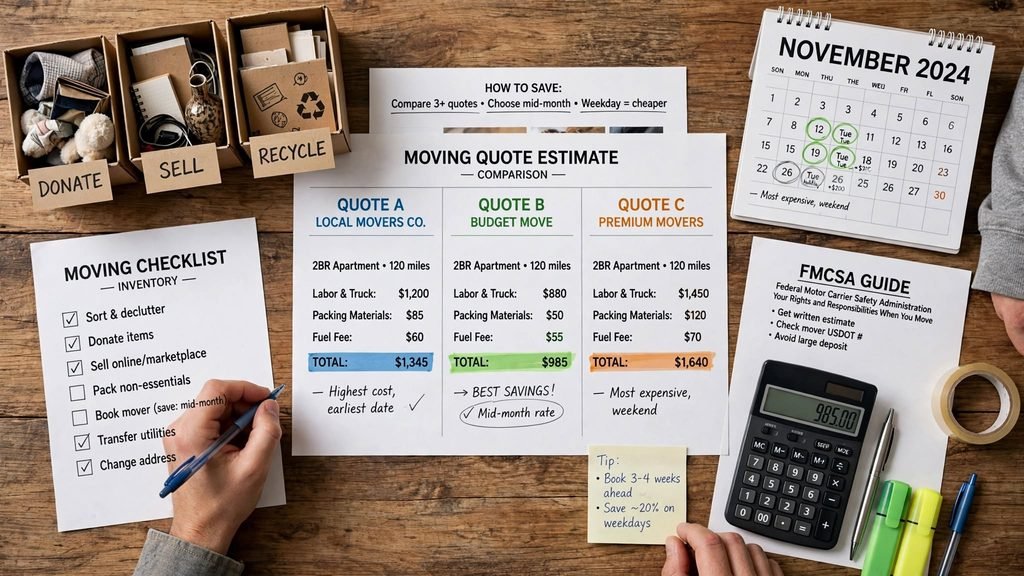
Next, reduce the number of items you plan to transport. Sell, donate, recycle, or responsibly dispose of belongings you no longer use. A smaller shipment may reduce packing requirements and transportation costs.
If your schedule allows, compare alternative moving dates. Pack nonessential items in advance, label boxes clearly, and keep an inventory to make loading and unpacking more organized. Ask whether your quote includes stairs, long carries, packing, and other services you may need.
The FMCSA also explains how written estimates work and why you should review the terms before agreeing to a move. Read its guidance on avoiding unexpected moving costs before signing a moving agreement.
How Moving Costs Fit Into Your Housing Budget
Relocation expenses are often paid close to the time you move, while rent and other household bills continue afterward. Planning for both sets of expenses can help you avoid stretching your budget too far.
If you are moving into a rental property, use our Rent Affordability Calculator to estimate a sustainable monthly rent based on your income and expenses. This can help you assess whether your new housing costs fit your ongoing budget after moving day.
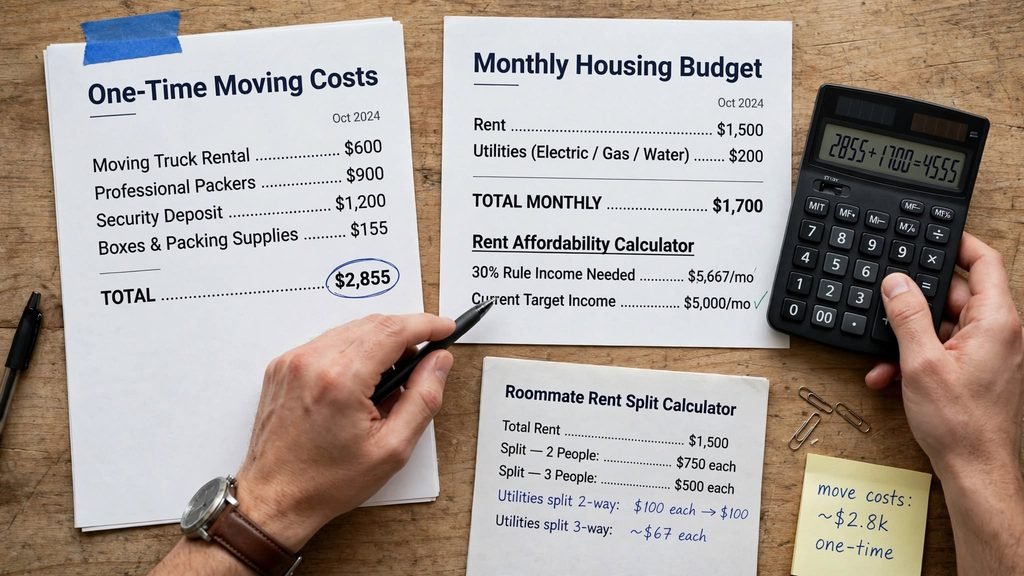
If you are sharing a home with other people, our Roommate Rent Split Calculator can help you divide rent between roommates according to your chosen arrangement. Remember that your moving budget and your recurring monthly housing budget are different calculations, and both deserve attention.
Why Use Our Moving Cost Calculator?
Our moving cost calculator provides a convenient way to organize your expected relocation expenses in one place. Rather than relying on a rough guess, you can enter individual cost estimates, review the combined total, and update your numbers as your plans develop.
The calculator can be useful for renters moving between apartments, families relocating to another home, students planning a move, and households comparing professional movers with a do-it-yourself option.
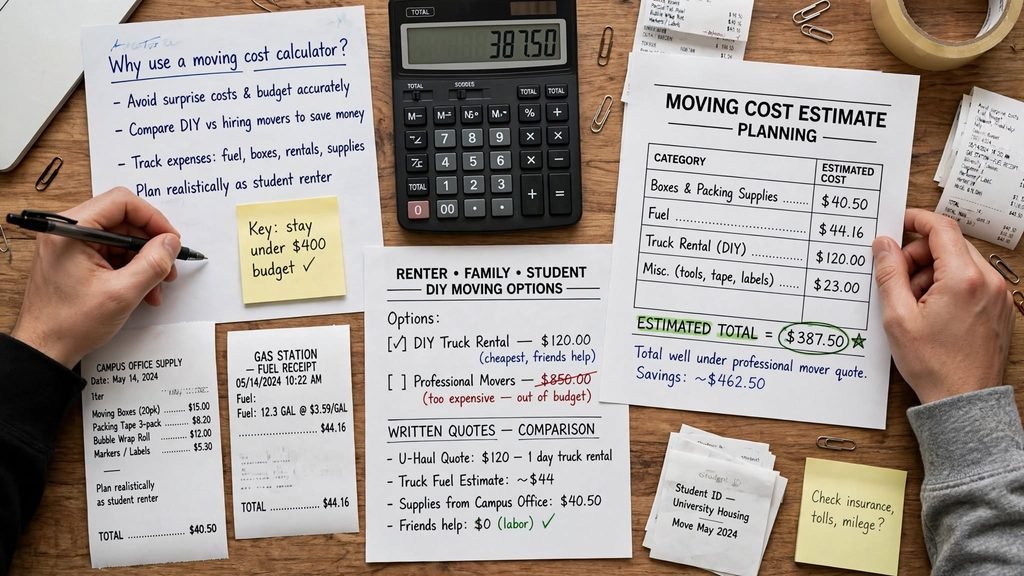
For the most useful result, base your entries on current quotes whenever possible. If you do not yet know the price of a service, use a preliminary estimate and replace it when you have better information. Keep receipts and written quotes so you can compare your actual spending with your original plan.
No online calculator can guarantee the final price of every relocation. Your actual costs depend on the services selected, the items transported, the contract, and circumstances on moving day. Treat the calculated amount as a planning estimate and confirm important charges directly with the relevant providers.
Final Thoughts
Planning a move becomes easier when you understand the costs involved before moving day. By listing transportation, labor, packing supplies, storage, and other applicable expenses, you can build a clearer picture of your financial needs.
Use the moving cost calculator to estimate your relocation total, compare different moving plans, and update your budget as you receive confirmed prices. Combine that estimate with careful research and written quotes to make your move more organized and financially manageable.
Frequently Asked Questions
The cost depends on your moving distance, household size, transportation method, labor, packing requirements, and additional services. Local and long-distance moves can have very different expenses. Enter your expected charges into the moving cost calculator to create a personalized estimate.
Include transportation, professional movers or labor, truck rental, fuel, packing supplies, storage, travel, cleaning, and other applicable expenses. Add a contingency reserve if your budget allows, and avoid counting any charge twice.
Not necessarily. A truck rental may have a lower initial price, but you may also need to pay for fuel, mileage, supplies, labor, and other costs. Professional movers may include several services in one quote. Compare the complete cost of each option before deciding.
Compare written quotes, reduce the number of items you transport, pack suitable belongings yourself, and compare available moving dates. Check what each quote includes so you can avoid unexpected charges and make an informed comparison.
No. It calculates an estimate using the amounts you enter. Your final cost may differ because of service changes, additional items, access conditions, or contract terms. Confirm the final price and included services with your moving company or rental provider.
A reserve can help you prepare for unexpected expenses, especially when some prices are not confirmed. Choose an amount that suits your financial situation and the uncertainty in your estimates.
You can use the FMCSA’s official Protect Your Move resources to review consumer guidance and find information about checking interstate movers and brokers.