
Last Updated: November 04, 2026
Planning a painting project starts with one important question: how much paint do you need? Buying too little can interrupt your work, while buying too much may leave you with unused paint and unnecessary expense. A reliable paint calculator helps you estimate the quantity required before you begin.
Our free paint calculator estimates the amount of paint needed for interior walls using wall measurements, doors, windows, the number of coats, paint coverage, and an optional extra allowance. It is designed for homeowners, renters completing permitted projects, and DIY enthusiasts who want a practical starting point for planning a painting job.
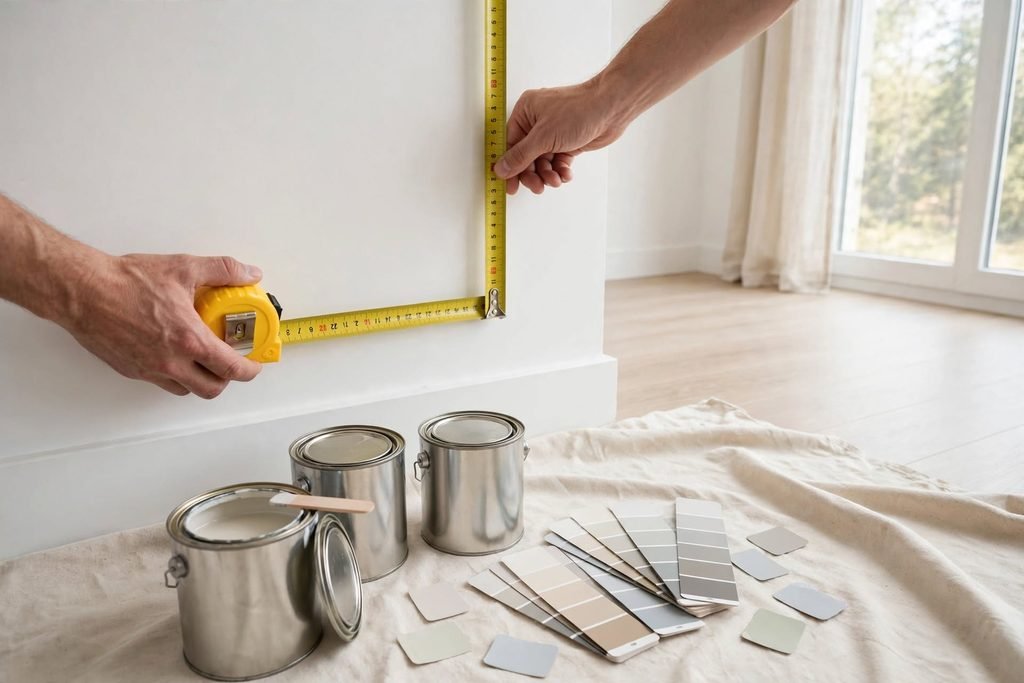
Whether you are refreshing a bedroom, updating a living room, or painting several walls, this guide explains how to measure your space, use the calculator, and understand the results.
Paint Calculator
Estimate how much paint you need for your walls.
Enter your wall measurements, subtract doors and windows, and choose your number of coats to estimate the paint required.
1. Wall Measurements
2. Paint Settings
Estimate based on the measurements and coverage entered.
This tool provides an estimate, not a guarantee. It calculates wall paint only and does not include ceilings, trim, or primer. Measure openings more accurately if they differ significantly from the default door and window deductions.
What Is a Paint Calculator?
A paint calculator is a tool that estimates how much paint is needed to cover a measured surface. Instead of guessing how many cans to buy, you enter your wall dimensions and the product's coverage rate.
The paint calculator on this page estimates the total wall area, subtracts standard allowances for doors and windows, accounts for multiple coats, and adds an optional allowance for touch-ups and application losses.
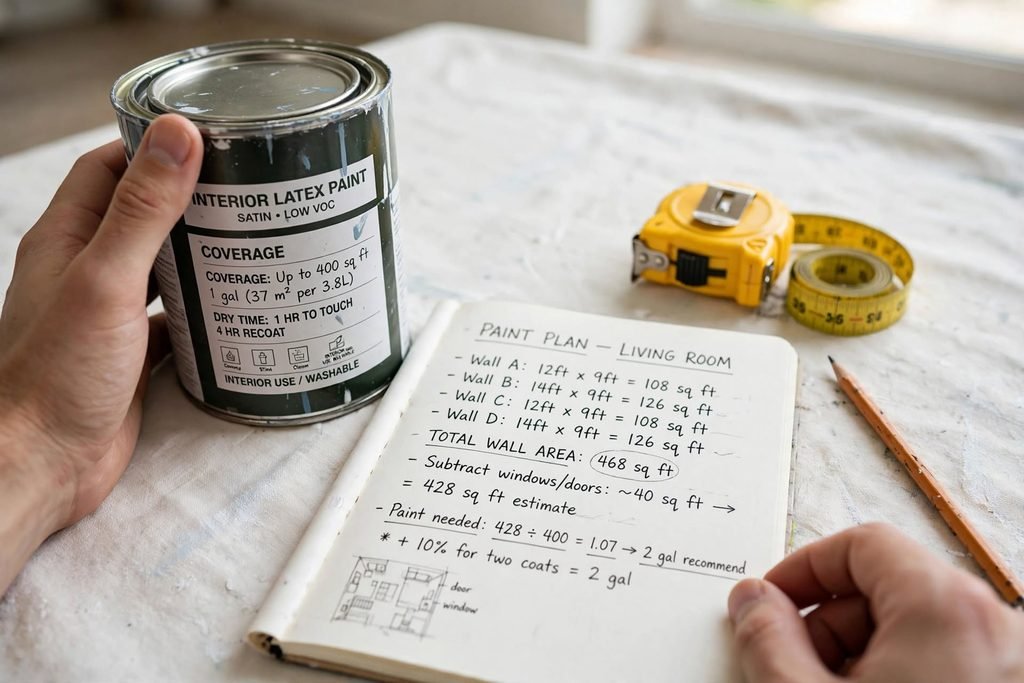
The result is an estimate in US gallons. You can also select a one-gallon can or a five-gallon bucket to estimate the number of containers needed.
Remember that the calculator covers walls only. Ceilings, trim, doors, and separate surfaces should be measured independently if you plan to paint them.
How to Use the Paint Calculator
Follow these steps to estimate your paint requirements.
1. Measure the Total Wall Length
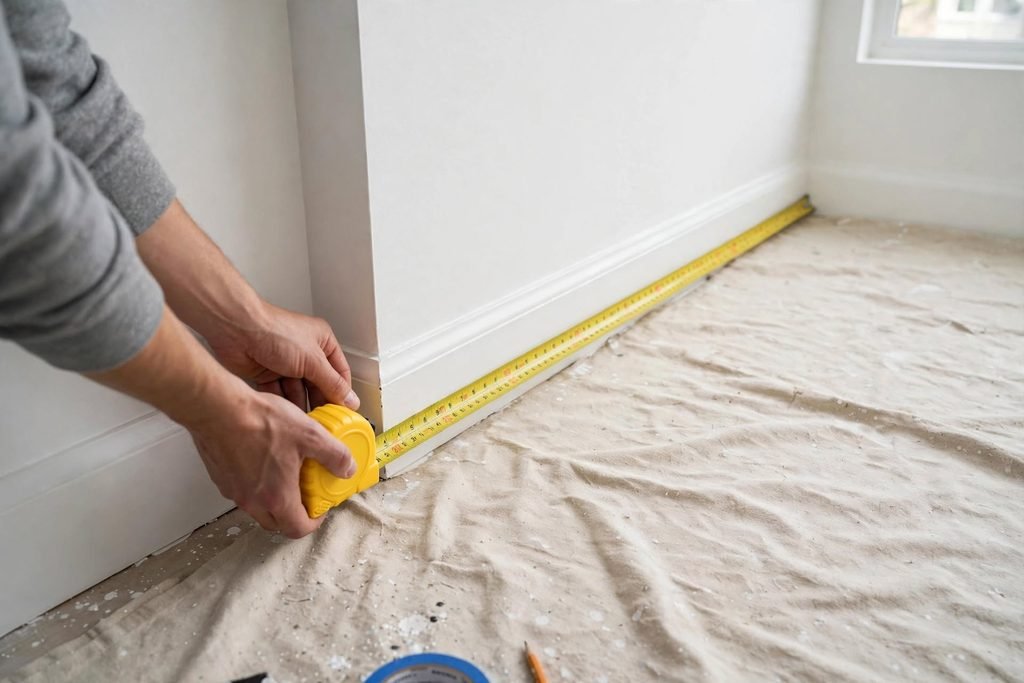
Measure the length of each wall you intend to paint, then add the measurements together. Enter the combined length in feet.
For example, if the four walls measure 12, 12, 10, and 10 feet, their total length is 44 feet.
If you are painting only two walls, include only those two walls in your measurement.

2. Enter the Wall Height
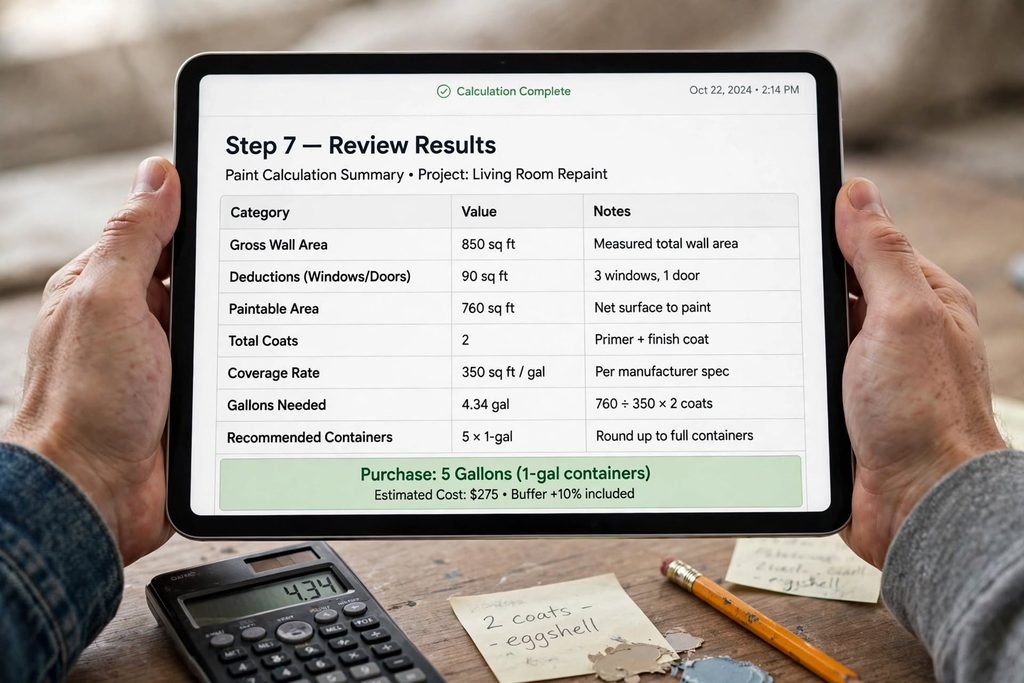
Measure from the floor to the ceiling and enter the height in feet. Multiply the total wall length by the wall height to calculate the gross wall area.
For example:
44 feet × 8 feet = 352 square feet.
3. Enter Doors and Windows
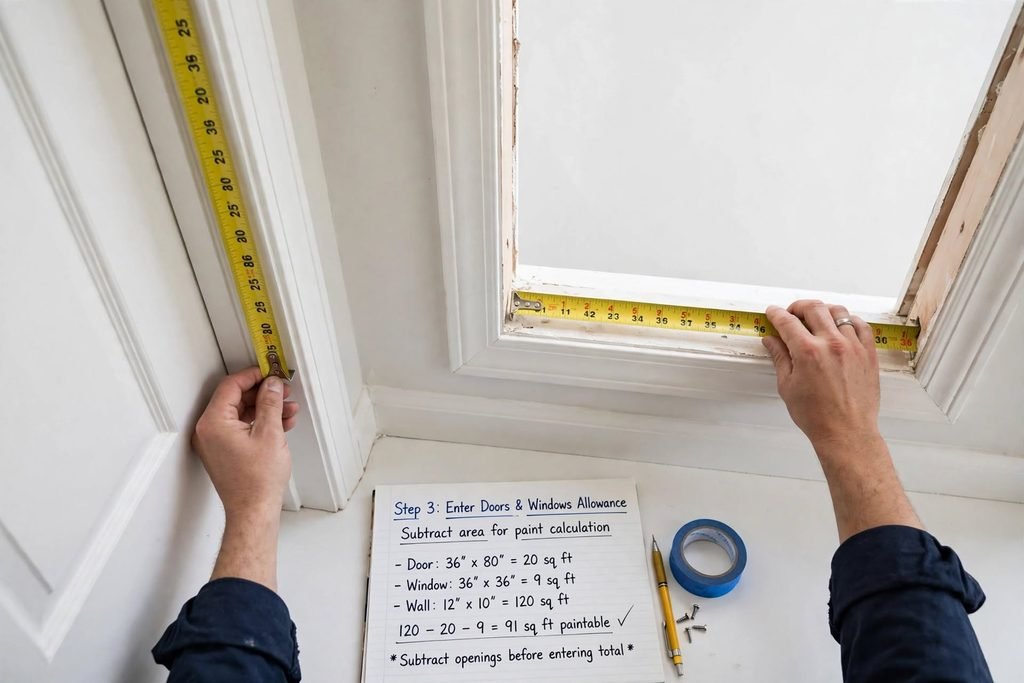
The calculator subtracts an estimated 21 square feet for each door and 15 square feet for each window.
These are default allowances, not universal dimensions. If your doors or windows are significantly larger or smaller, measure the openings and adjust your estimate outside the calculator, or use the actual paintable wall area.
4. Choose the Number of Coats
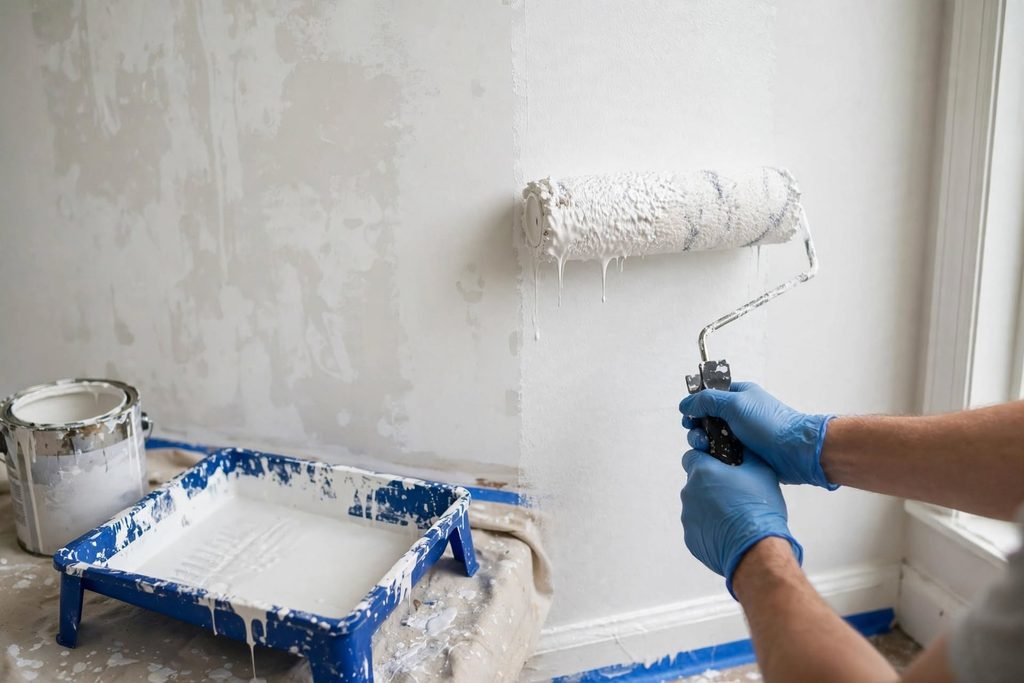
Select the number of coats you expect to apply. Two coats are a common planning assumption, but the right number depends on the paint, surface condition, existing color, and manufacturer's instructions.
Changing the number of coats changes the estimated paint requirement automatically.
5. Enter Paint Coverage
Check the label or technical information for your chosen product. Enter how many square feet one gallon is expected to cover.
For a preliminary estimate, some interior paints cover roughly 350–400 square feet per gallon under suitable conditions. Actual coverage varies by product, application method, and surface texture. Sherwin-Williams provides additional guidance in its official paint calculator and coverage FAQs.


6. Add an Extra Allowance
The calculator starts with a 10% allowance. This can help account for small application losses and touch-ups.
The appropriate amount depends on the project. Uneven surfaces, textured walls, and complicated layouts may require more paint than smooth, properly prepared surfaces.
7. Review the Results
The calculator displays the gross wall area, estimated paintable area, total area for all coats, adjusted area, estimated gallons, and approximate number of containers.
Review the result alongside the coverage information on your paint product before purchasing supplies.
How Is Paint Quantity Calculated?
The calculation follows a few straightforward steps.
Gross wall area
Total wall length × wall height = gross wall area.
Paintable wall area
Gross wall area − estimated door area − estimated window area = paintable area.
Area for all coats
Paintable area × number of coats = total area to cover.
Adjusted area
Area for all coats × (1 + extra allowance percentage) = adjusted area.
Paint required
Adjusted area ÷ coverage per gallon = estimated gallons needed.
For example, suppose your walls have a gross area of 352 square feet. You have one door and two windows, using the calculator's standard deductions.
- Gross wall area: 352 square feet
- Door deduction: 21 square feet
- Window deductions: 30 square feet
- Paintable area: 301 square feet
- Two coats: 602 square feet
- With a 10% allowance: 662.2 square feet
- Coverage: 350 square feet per gallon
- Estimated requirement: approximately 1.89 gallons
You would generally plan to purchase enough paint to cover at least this quantity, taking available container sizes and the product label into account.
Why Accurate Measurements Matter
A paint calculator is only as reliable as the information entered. Measuring carefully can help you avoid an unnecessary extra trip to the store or purchasing significantly more paint than your project requires.
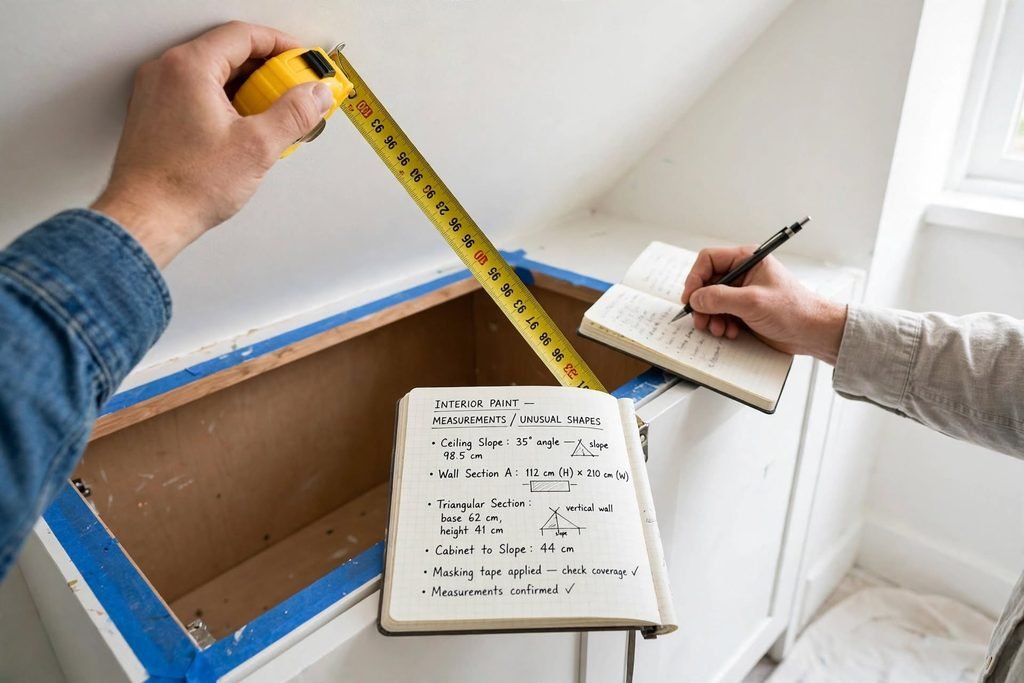
Measure each wall separately if the room has different heights or unusual shapes. For angled ceilings, built-in cabinets, large openings, or extensive trim, a single simple wall calculation may not capture every detail.
If you are painting multiple rooms with the same product and color, calculate each room separately or add their paintable areas together. Keep track of different colors and products, because leftover paint from one color may not be suitable for another surface.
Tips for Planning a Painting Project
Check the Surface First
Repair holes, address loose or peeling paint, and clean surfaces as appropriate before painting. Surface preparation can affect both the finish and the amount of paint needed.
Follow the Product Instructions
Use the coverage rate, preparation requirements, drying times, and recommended number of coats supplied by the manufacturer. The estimate from a paint calculator should not replace product-specific instructions.
Consider Primer Separately
Primer may be required for bare surfaces, repairs, stains, or certain changes in color. This calculator estimates finish paint only and does not include primer. Estimate primer separately using its own coverage information.
Protect Your Home and Family
For older homes, pay attention to potential lead-based paint hazards. In the United States, homes built before 1978 may contain lead-based paint. Sanding or scraping old painted surfaces can create hazardous dust. Review the EPA's lead-safe renovation guidance before disturbing old paint, and use qualified professionals when appropriate.
Plan Other Materials
Paint is only one part of a home improvement project. If you are updating a room more extensively, our Flooring Calculator can help estimate flooring materials, while the Tile Calculator can estimate tile quantities for floors or walls.
For more painting guidance, read How to Choose the Right Paint Finish for Every Room. If you are preparing a wider home project, our guide to Budget-Friendly Home Improvements That Add Comfort offers additional ideas.
Final Thoughts
Estimating paint before starting a project helps you plan materials and reduce avoidable waste. Our paint calculator gives you a practical estimate based on wall dimensions, openings, coats, coverage, and an optional extra allowance.
Measure carefully, check the manufacturer's coverage information, and remember to account separately for ceilings, trim, and primer. With a little preparation, you can approach your next painting project with a clearer idea of how much paint you need.
Frequently Asked Questions
The amount depends on the combined wall area, the size of doors and windows, the number of coats, and the paint's coverage rate. Enter your measurements into the paint calculator to estimate the quantity.
Coverage varies by product and surface. Some paints cover approximately 350–400 square feet per gallon under suitable conditions. Always check the product label for the most relevant estimate.
Yes, when estimating wall paint, subtract openings that will not be painted. This calculator uses standard deductions of 21 square feet per door and 15 square feet per window, so adjust your planning if your openings differ substantially.
Two coats are a common starting assumption, but some projects require more or fewer coats. Follow the manufacturer's instructions and consider the existing color, surface condition, and desired finish.
No. It estimates wall paint only. Measure the ceiling separately if you plan to paint it, and use the product's coverage rate to calculate the additional quantity.
No. Primer is not included in the result. If your project requires primer, calculate it separately using the coverage rate for the specific primer product.
It adds a percentage to the calculated requirement to allow for application losses and possible touch-ups. The default is 10%, but the appropriate allowance depends on the surface and project.
No. It provides an estimate based on the measurements and coverage information entered. Surface texture, application technique, product formulation, and other conditions can change actual paint consumption.