
Last Updated: November 01, 2026
Electricity bills can be difficult to predict, especially when energy use changes from month to month. Air conditioning, heating, lighting, laundry, cooking, and everyday electronics all contribute to household electricity consumption. Understanding how much electricity your home uses can help you plan your budget and identify opportunities to save.
Our electricity cost calculator helps you estimate your monthly electricity expenses using your energy consumption in kilowatt-hours (kWh), your electricity rate, and any fixed monthly charges. Instead of guessing how much your next bill might be, you can enter information from your utility bill and get a clear estimate in seconds.

Whether you are comparing electricity plans, tracking household expenses, or trying to reduce your monthly bills, this calculator provides a practical starting point.
Electricity Cost Calculator
Estimate your monthly electricity costs using your energy usage and electricity rate.
Your Electricity Details
Estimated electricity cost including fixed monthly charges
Energy Charge = Monthly kWh × Electricity Rate per kWh
Estimated Monthly Cost = Energy Charge + Fixed Monthly Charges
What Is an Electricity Cost Calculator?
An electricity cost calculator is a tool that estimates how much you pay for the electricity your household consumes. It uses two main figures: the amount of electricity used and the price charged for each kilowatt-hour.
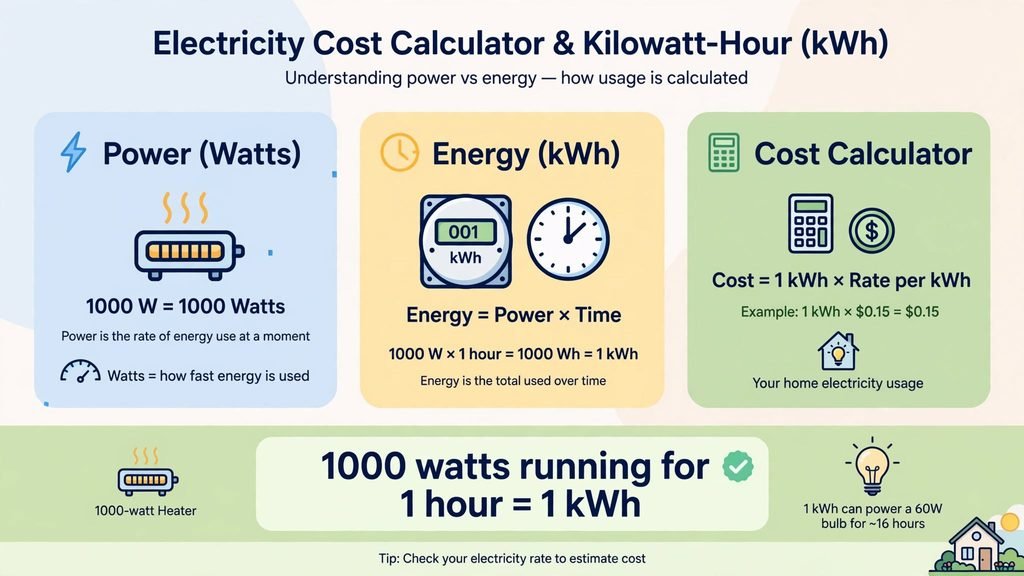
Electric utilities generally measure household electricity consumption in kilowatt-hours. A kilowatt-hour represents the energy used by a 1,000-watt appliance running for one hour. Watts and kilowatts measure power, while kilowatt-hours measure energy consumed over time.
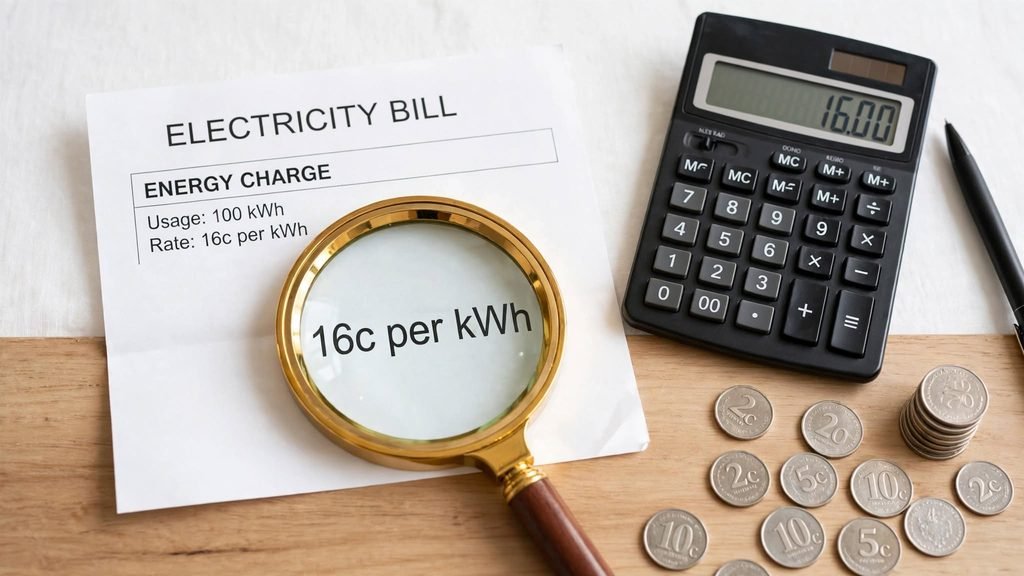
For example, if your household uses 800 kWh in one month and your electricity rate is 16 cents per kWh, your energy charge would be:
800 × $0.16 = $128
If your utility also charges a fixed monthly fee, that amount should be added to estimate the total bill more accurately.
The electricity cost calculator makes this calculation easier and allows you to explore how different consumption levels or electricity rates affect your expenses.
How to Use the Electricity Cost Calculator
You only need a few details from your electricity bill.

1. Enter Your Monthly Electricity Usage
Find your monthly electricity consumption on your utility bill. It is usually displayed as kWh or kilowatt-hours.
For example, you might enter 750 kWh if your household used that amount during the previous billing period.
If you do not have a recent bill, you can use an estimated monthly figure. However, using actual meter readings or recent bills generally produces a more useful estimate.
2. Enter Your Electricity Rate
Your electricity rate is the amount you pay for each kilowatt-hour.
In the United States, rates are often displayed in cents per kWh. For example, a rate of 16 cents per kWh should be entered as 16 in a calculator that requests cents.
Check the electricity supply or energy charge section of your bill. If your plan uses different rates at different times, a single rate may only provide an approximate result.

3. Add Fixed Monthly Charges
Some electricity providers charge a monthly customer fee or other fixed charges that do not depend directly on how much electricity you consume.
Enter these charges if you want to include them in your estimate. If you do not have any fixed charges or do not know the amount, you can leave this field at zero.
4. Review Your Estimated Costs
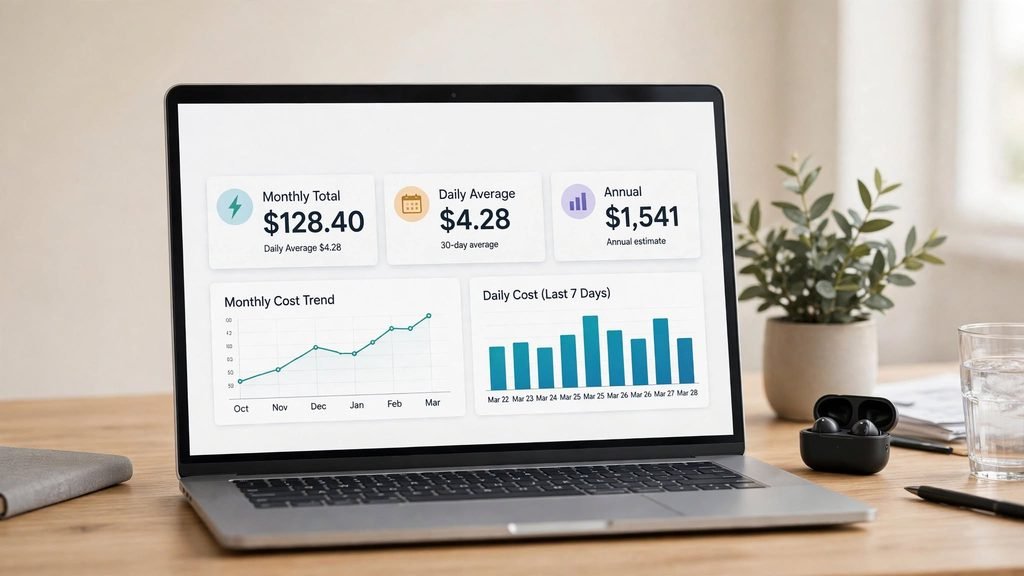
The calculator can display your estimated energy charge, monthly total including fixed charges, average daily cost, and estimated annual cost.
Remember that the annual estimate assumes your monthly usage, electricity rate, and fixed charges remain the same throughout the year.
How to Calculate Electricity Costs
The basic formula is straightforward:
Electricity Cost = Electricity Usage (kWh) × Electricity Rate ($/kWh)
To estimate the monthly amount including fixed charges:
Estimated Monthly Cost = Energy Charge + Fixed Monthly Charges
For example, suppose a household uses 900 kWh per month and pays 17 cents per kWh. Its energy charge is:
900 × $0.17 = $153
If the monthly fixed charge is $12, the estimated monthly total becomes:
$153 + $12 = $165
This is an estimate of the electricity-related charges included in the calculation. It may not match the final utility bill if taxes, additional fees, credits, or other charges apply.
Understanding Watts, Kilowatts, and Kilowatt-Hours
Understanding these three terms can make electricity calculations much easier.
- Watt (W): A unit used to describe electrical power.
- Kilowatt (kW): Equal to 1,000 watts.
- Kilowatt-hour (kWh): A unit of energy representing one kilowatt of power used for one hour.
For example, a 1,500-watt appliance uses 1.5 kilowatts when operating at its rated power. If it runs continuously for two hours, it consumes approximately 3 kWh.

The actual electricity consumption of an appliance may vary depending on its operating cycle, settings, condition, and usage pattern.
You can learn more from the U.S. Energy Information Administration’s guide to measuring electricity.
What Affects Your Monthly Electricity Bill?
Several factors influence the amount you pay for electricity.
Household Electricity Consumption
The more electricity your home uses, the higher your energy charge is likely to be when your rate remains unchanged. Heating, cooling, water heating, refrigeration, and laundry can all contribute to household consumption.
Electricity Rates in Your Area
Electricity prices vary across the United States. The rate depends on factors such as location, energy sources, fuel costs, utility infrastructure, and local regulations.
The U.S. Energy Information Administration explains these differences in its guide to electricity prices and factors affecting prices.
Seasonal Changes
Many households use more electricity during periods of extreme temperatures. Air conditioning can increase consumption during hot summers, while electric heating can raise usage during cold winters.
Your monthly electricity bill may therefore change even when your daily routines remain similar.
Electricity Plan and Billing Structure
Some electricity plans use a flat rate, while others have time-of-use pricing, tiered rates, or other pricing structures. A calculator using one average rate cannot fully reproduce every type of electricity plan.
If your provider charges different prices during peak and off-peak hours, use a representative average rate for a general estimate.
Fixed Fees and Additional Charges
Your final bill may include customer charges, delivery fees, taxes, regulatory charges, credits, and other adjustments. These items can make the total amount different from the basic energy cost.
How to Reduce Your Electricity Costs
You do not always need major home improvements to start managing electricity expenses. Small changes in everyday habits can make a difference.
- Turn off lights in rooms that are not being used.
- Use LED lighting where practical.
- Adjust heating and cooling settings to avoid unnecessary energy use.
- Clean or replace HVAC filters according to the manufacturer’s recommendations.
- Avoid leaving electronics running when they are not needed.
- Use energy-saving settings on household appliances.
- Wash full loads of laundry when practical.
- Check for air leaks around doors and windows.
- Compare electricity plans carefully, including fixed fees and contract conditions.
For more practical ideas, read our upcoming guide: How to Lower Your Electricity Bill Without Sacrificing Comfort.
You can also explore 12 Simple Energy-Saving Habits for American Households for everyday ways to manage home energy use.
Compare the Cost of Individual Household Appliances
Your total electricity bill combines the energy used by many different devices. If you want to understand which appliance contributes most to your expenses, estimating each device separately can be useful.
Our Appliance Energy Cost Calculator will help you estimate operating costs using an appliance’s wattage, daily usage hours, and electricity rate.
This can help you compare appliances and identify devices that may be worth using more efficiently.

For additional guidance, see our planned article: What Appliances Use the Most Electricity at Home?.
Can Solar Panels Reduce Your Electricity Bill?
Solar panels can reduce the amount of electricity a household purchases from its utility, depending on system production, household consumption, local electricity rates, and the rules governing exported electricity.
However, installing solar panels does not automatically eliminate every electricity charge. Some households continue to pay fixed utility fees, and savings depend on the system’s cost, performance, financing arrangements, and applicable incentives.
If you are considering a solar installation, use our Solar Savings Calculator to estimate potential savings based on your electricity use and expected solar production.

You should also compare installation quotes and review the electricity provider’s net metering or export compensation rules before making a decision.
Why Use an Electricity Cost Calculator?
An electricity cost calculator can help you make more informed household decisions.
Plan your monthly budget: Estimate energy expenses and include them in your household budget.
Understand the effect of price changes: See how a higher or lower electricity rate affects your estimated bill.
Monitor consumption: Compare different months to identify changes in household electricity use.
Evaluate energy-saving habits: Estimate how lower consumption could affect your monthly expenses.
Compare energy options: Use the estimate as a starting point when evaluating appliances, electricity plans, or solar energy.

The calculator is most useful when you enter accurate information from your utility bill and update it when your electricity rate or usage changes.
Final Thoughts
Understanding your household electricity consumption is an important step toward managing utility expenses. Our electricity cost calculator gives you a simple way to estimate energy charges using your monthly kWh usage, electricity rate, and fixed monthly fees.
Use your latest utility bill for the most accurate inputs, compare estimates over time, and explore practical ways to reduce unnecessary electricity use. While the result is not a replacement for your provider’s official bill, it can help you plan your household budget and make more informed energy decisions.
Frequently Asked Questions
Multiply your electricity consumption in kWh by your electricity rate per kWh. Add fixed monthly charges and any other applicable costs that you want to include in your estimate.
kWh stands for kilowatt-hour. It measures the amount of electrical energy consumed over time. Your utility uses this measurement to calculate energy charges.
The price varies by location, utility provider, and electricity plan. Check your latest bill to find your actual rate rather than relying on a national average.
Look for the energy or supply charge on your electricity bill. If your bill shows a price in cents per kWh, use that rate in the calculator.
The calculator estimates energy charges and allows you to add fixed monthly charges. It does not automatically know your local taxes, delivery fees, or every utility adjustment. Add other charges separately when you know their amounts.
Your bill may include taxes, delivery charges, fixed fees, additional services, adjustments, or a different billing period. Your actual consumption or electricity rate may also differ from the figures entered.
Watts measure power, while kWh measures energy consumed over time. Residential electricity bills generally use kWh to measure consumption.
It can. Consumption may increase during hot or cold seasons, and some electricity plans charge different rates depending on the time of day or season.
Yes. You can enter a business’s monthly electricity consumption and rate to estimate its energy charge. However, commercial electricity bills may include demand charges and other pricing components that require a more detailed calculation.
Start by reviewing your consumption, adjusting heating and cooling habits, improving lighting efficiency, and checking how much energy frequently used appliances consume. Compare your monthly bills to see whether your efforts are making a difference.