
Last Updated: November 05, 2026
Planning a road trip is easier when you know how much you may spend on fuel before leaving home. Whether you are driving to another city, visiting family, commuting for work, or organizing a weekend getaway, fuel can represent an important part of your travel budget.
A gas cost calculator helps you estimate your trip’s fuel expenses using three essential details: driving distance, your vehicle’s fuel economy, and the price of gasoline per gallon. Instead of guessing how much money you may need at the pump, you can make a more informed estimate and prepare your travel budget in advance.

This guide explains how to calculate gas costs, what information you need, how to understand the results, and which practical habits may help you reduce unnecessary fuel expenses.
Gas Cost Calculator
Estimate how much fuel your trip will cost.
Your Trip Fuel Estimate
Estimates are based on the distance, MPG, and fuel price you enter. Actual fuel use and costs may vary with traffic, road conditions, vehicle load, weather, and driving habits.
What Is a Gas Cost Calculator?
A gas cost calculator is a simple online tool that estimates the amount of money required to fuel a vehicle for a particular journey.
The calculation is based on how far you plan to drive, how many miles your vehicle travels per gallon, and how much gasoline costs in your area.
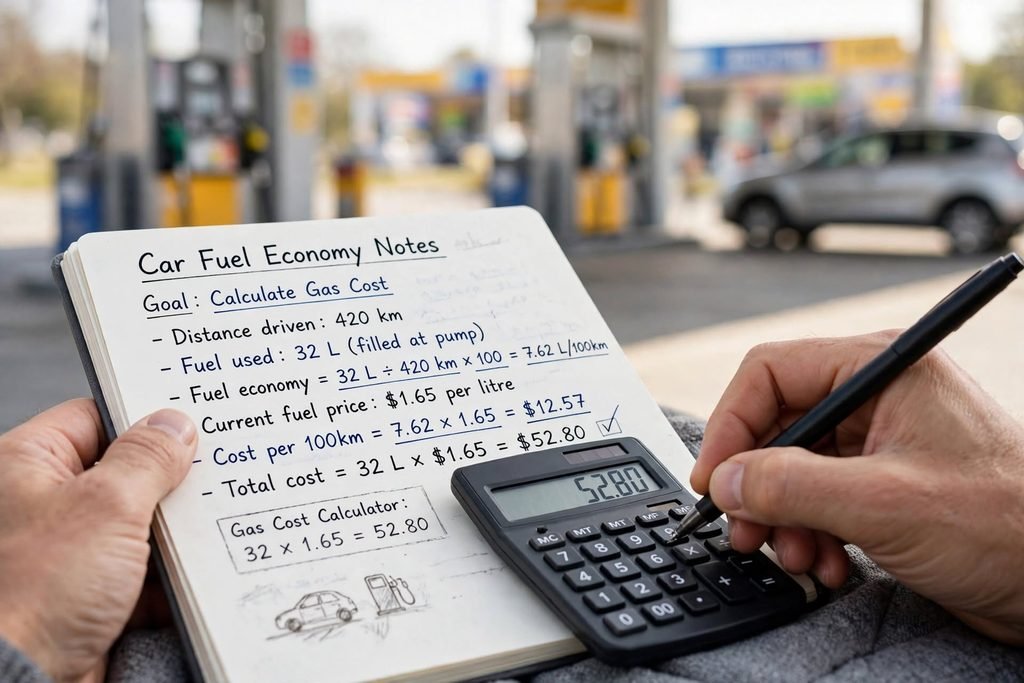
For example, a vehicle that travels 25 miles per gallon will generally use less fuel over the same distance than a vehicle that travels 15 miles per gallon. The final cost also changes when gasoline prices increase or decrease.
Using a gas cost calculator can help you:
- Estimate fuel expenses before a road trip.
- Compare the expected fuel costs of different vehicles.
- Plan a travel budget more realistically.
- Estimate the cost of one-way and round trips.
- Divide fuel expenses among passengers.
- Understand how fuel prices affect your travel expenses.
The result is an estimate rather than a guarantee because real-world fuel consumption can change with driving conditions, traffic, weather, and vehicle load.
How to Use the Gas Cost Calculator
Our free gas cost calculator is designed to make the process straightforward. You do not need advanced automotive knowledge or complicated calculations.
Enter the following information into the calculator.
1. Enter Your Trip Distance
Start by entering the distance you expect to drive in miles.
For a one-way journey, enter the distance from your starting point to your destination. If you are traveling 250 miles to visit another city, enter 250.
The calculator then uses your selected trip type to determine the total driving distance.
If you are planning several stops, add the estimated distances together before entering the total. This gives you a more useful estimate than calculating only the distance to your final destination.
2. Select One-Way or Round Trip
Choose whether you are calculating a one-way journey or a round trip.
A one-way trip uses the distance entered once. A round trip doubles that distance to account for the return journey.
For example:
- One-way distance: 250 miles.
- Round-trip distance: 500 miles.
Remember that the return route may not always be identical. If you expect to take a different route home, use the combined distance for both directions when entering your estimate.
3. Enter Your Vehicle’s MPG
MPG means miles per gallon. It describes how many miles a vehicle can travel using one gallon of fuel.
A higher MPG value generally means better fuel efficiency. For example, a vehicle rated at 30 MPG can travel farther on one gallon than a vehicle rated at 20 MPG under comparable conditions.
Use your vehicle’s estimated fuel economy. You can check the owner’s manual, the vehicle manufacturer’s information, or the official FuelEconomy.gov website.
If you want to calculate your actual fuel economy from the distance driven and fuel used, visit our MPG Calculator.
4. Enter the Gas Price Per Gallon
Enter the price you expect to pay for one gallon of gasoline.
Fuel prices can vary between states, cities, and individual stations. They can also change over time. For this reason, use a recent local pump price rather than assuming that the price is the same everywhere.
For current U.S. gasoline price information, you can consult the U.S. Energy Information Administration’s gasoline price data.
The calculator uses your entered price to estimate the total cost. It does not automatically retrieve live fuel prices.
5. Enter the Number of People Sharing the Cost
If you are traveling with family or friends and plan to divide the fuel expense equally, enter the total number of people sharing the cost.
For example, if the estimated fuel expense is $80 and four people agree to split it equally, the estimated share is $20 per person.
This feature is useful for group road trips, although it does not automatically include parking, tolls, food, accommodation, or other travel expenses.
How Does the Gas Cost Calculator Work?
The calculation uses a basic fuel-cost formula.
Step 1: Calculate total driving distance
For a round trip:
Total Distance = One-Way Distance × 2
For a one-way trip:
Total Distance = One-Way Distance
Step 2: Calculate the fuel required
Fuel Required (Gallons) = Total Distance ÷ Vehicle MPG
Step 3: Calculate the estimated fuel cost
Estimated Fuel Cost = Fuel Required × Price Per Gallon
Step 4: Calculate the cost per person
Cost Per Person = Total Fuel Cost ÷ Number of People Sharing
These formulas provide a practical estimate using the information you enter.
Gas Cost Calculator Example
Suppose you are planning a round trip with the following details:
- One-way distance: 250 miles.
- Trip type: Round trip.
- Vehicle fuel economy: 25 MPG.
- Gas price: $3.50 per gallon.
- Number of people sharing: 1.
First, calculate the total distance:
250 × 2 = 500 miles.
Next, calculate the fuel required:
500 ÷ 25 = 20 gallons.
Finally, calculate the estimated fuel cost:
20 × $3.50 = $70.00.
Your estimated fuel expense for the round trip is therefore $70.
If four people share the cost equally, each person’s estimated share becomes $17.50.
This example shows how a gas cost calculator can turn a few simple details into a useful travel-budget estimate.
Why Your Actual Gas Cost May Be Different
The calculator uses your entered MPG and fuel price, but actual fuel consumption is not always identical to the estimate.
Several factors can affect the final amount.
Driving Speed and Acceleration
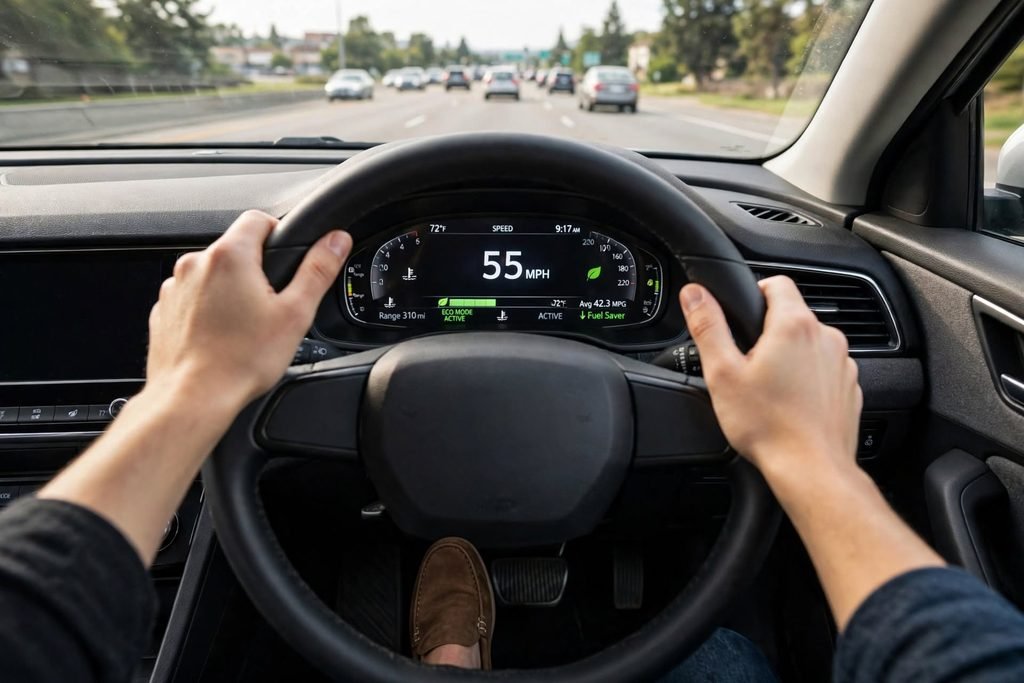
Frequent rapid acceleration, hard braking, and unnecessary speeding can increase fuel consumption. Smooth driving and anticipating traffic may help your vehicle use fuel more efficiently.

Traffic and Road Conditions
Heavy traffic, frequent stops, road construction, steep hills, and poor road conditions can affect fuel economy. A journey that looks short on a map may require more fuel if much of it takes place in congested traffic.
Tire Pressure
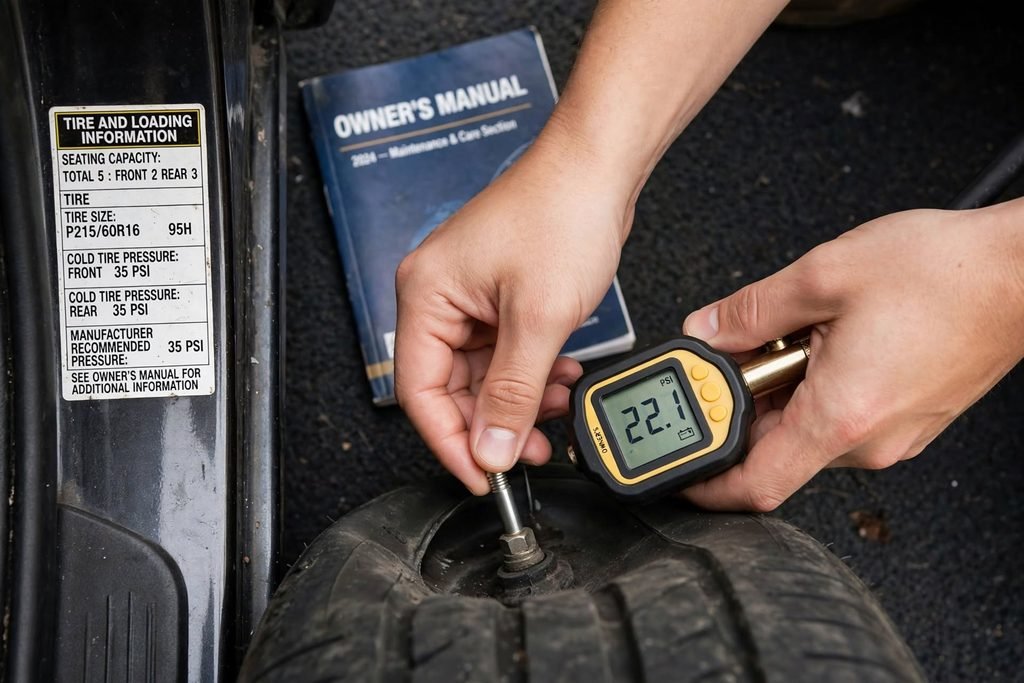
Underinflated tires can increase rolling resistance, requiring more energy to move the vehicle. Check tire pressure regularly and follow the manufacturer’s recommended pressure listed in the owner’s manual or vehicle information label.
Vehicle Weight and Cargo
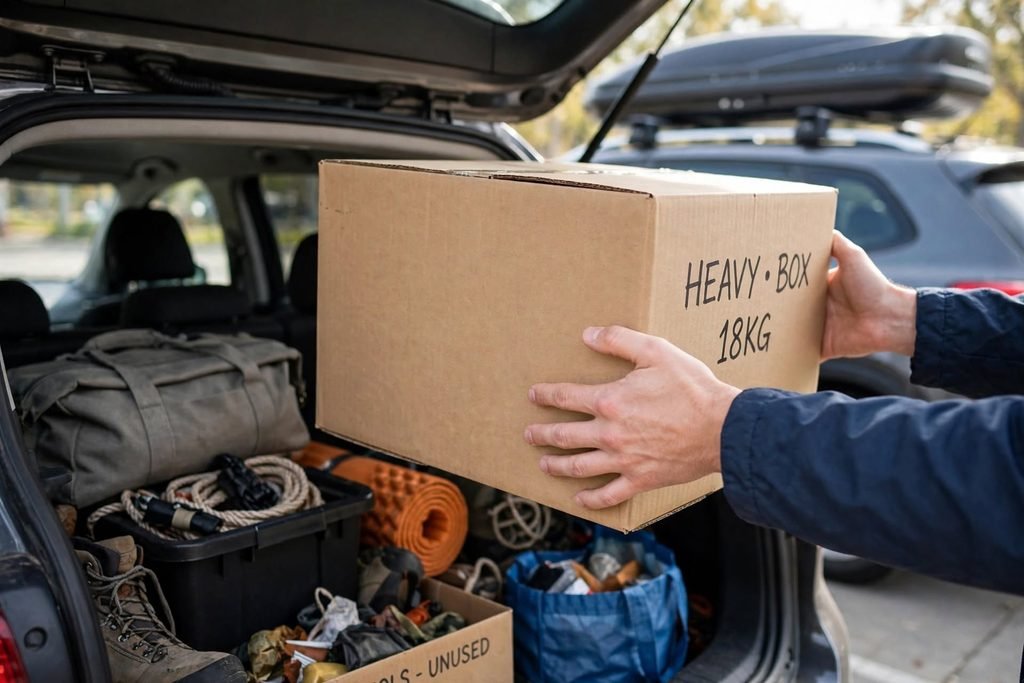
Carrying unnecessary items adds weight. Roof boxes and roof racks can also increase aerodynamic resistance, especially at higher speeds.
Removing equipment you do not need may help reduce unnecessary fuel consumption.
Weather and Air Conditioning
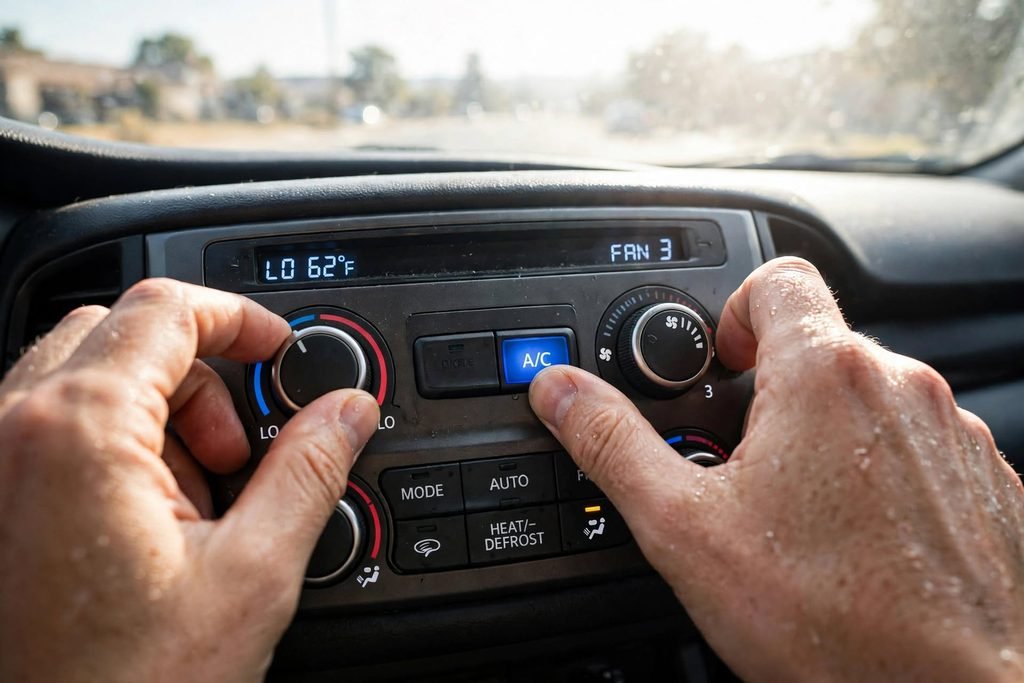
Very hot or cold weather can affect fuel economy. Air conditioning, heating requirements, and cold starts may also influence how much fuel your vehicle uses.
The U.S. Environmental Protection Agency explains several factors that can affect real-world fuel economy in its guide, Your Mileage May Vary.
Practical Ways to Reduce Your Trip Fuel Expenses
You cannot control every factor that affects gasoline prices, but you can make choices that help manage your fuel budget.
Plan your route before leaving. Use a navigation application to compare possible routes, check traffic conditions, and avoid unnecessary detours. A slightly longer route may sometimes be more practical if it avoids heavy congestion.
Combine several errands into one trip. Instead of making multiple short journeys throughout the day, organize nearby errands together when possible.
Drive smoothly. Avoid unnecessary rapid acceleration and hard braking. Maintain a steady speed when road conditions allow and always follow posted speed limits.
Check your tires. Proper tire pressure supports vehicle handling and can help avoid unnecessary rolling resistance.
Avoid carrying unnecessary weight. Remove items from your trunk that you do not need for the journey, and take off unused roof equipment when appropriate.
Maintain your vehicle. Follow the maintenance schedule recommended by the manufacturer. Regular inspections can help identify problems that may affect vehicle performance.
For more detailed guidance, the EPA provides additional fuel-saving recommendations in its fuel economy guide.
How to Budget for a Road Trip
Fuel is only one part of the cost of traveling by car. A realistic road-trip budget should consider other expenses as well.
Depending on your route and travel plans, you may need to account for:
- Gasoline for the full journey.
- Tolls and road charges.
- Parking fees.
- Meals and refreshments.
- Accommodation for overnight trips.
- Planned vehicle maintenance before a long journey.
- A reasonable allowance for unexpected travel expenses.
Start by using the gas cost calculator to estimate your fuel requirement. Then list the other expected expenses separately.
If you are planning a longer journey, you may also want to calculate how much your vehicle consumes in different driving conditions. Our MPG Calculator can help you understand your vehicle’s fuel economy.
For vehicle upkeep, our Car Maintenance Cost Calculator can help you estimate routine maintenance expenses.
Gas Cost Calculator vs. MPG Calculator
These two tools are related, but they answer different questions.
A gas cost calculator estimates how much money a particular journey may require based on distance, MPG, and gasoline price.
An MPG calculator determines how efficiently your vehicle uses fuel based on the distance driven and the amount of fuel consumed.
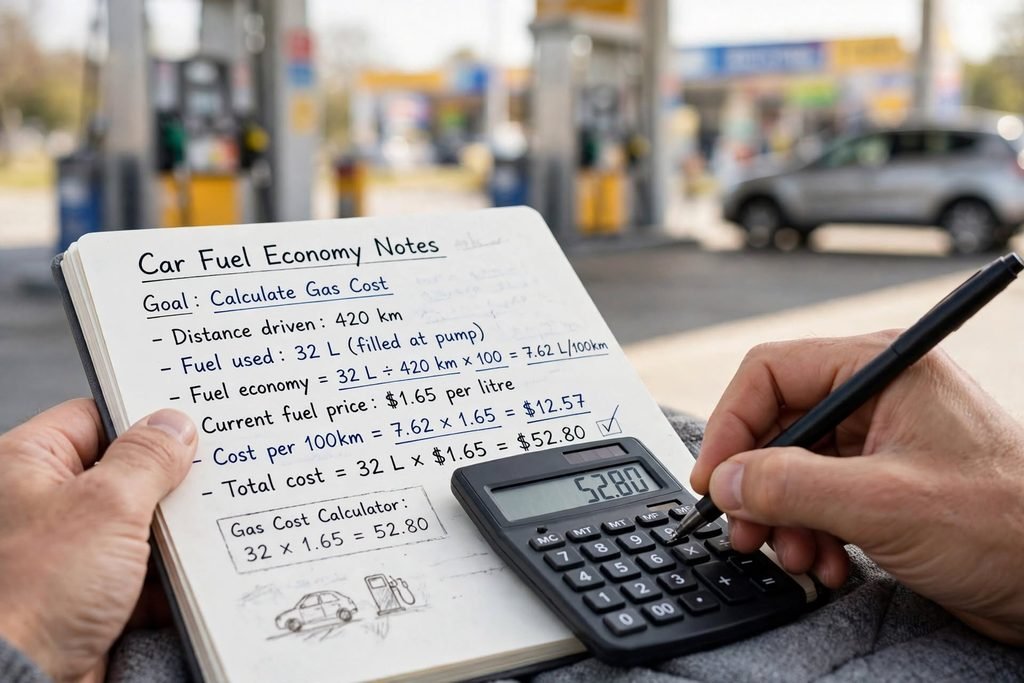
For example, use the gas cost calculator when you want to know the estimated cost of a 500-mile journey. Use the MPG calculator when you want to find out how many miles your vehicle travels per gallon.
Using both tools can help you understand your vehicle’s fuel consumption and plan future trips more confidently.
Final Thoughts
Knowing your expected fuel expenses before a journey can make travel planning much easier. A gas cost calculator gives you a straightforward way to estimate the fuel required, calculate the expected cost, and divide the expense among passengers.
For the most useful estimate, enter a realistic trip distance, use your vehicle’s actual fuel economy when available, and check a recent local fuel price. Remember that the final cost may change with driving conditions and other factors.
Use the calculator above before your next road trip to prepare a more informed fuel budget and make better decisions about your transportation expenses.
Frequently Asked Questions
Divide the total trip distance in miles by your vehicle’s MPG to estimate the gallons required. Then multiply the gallons by the price per gallon.
Yes. You can use the calculator on this page to estimate trip fuel expenses without paying a fee or creating an account.
No. You enter the price per gallon yourself. For a more accurate estimate, check a recent price from a local gas station or consult official U.S. price data.
Enter the one-way distance and select the round-trip option if you are returning along the same distance. The calculator will double the distance automatically.
MPG stands for miles per gallon. It measures how far a vehicle can travel using one gallon of fuel. A higher MPG generally indicates better fuel efficiency.
Yes. Enter the total number of people sharing the fuel expense. The calculator will estimate each person’s equal share.
Actual fuel use can be affected by traffic, driving speed, weather, road conditions, tire pressure, vehicle load, and other factors. The calculator provides an estimate based on the values you enter.
Yes, if you enter the appropriate fuel economy in miles per gallon and the price per gallon of the fuel your vehicle uses. Make sure the price corresponds to the correct fuel type.