
Last Updated: November 07, 2026
Knowing how much a homemade meal costs can make meal planning easier and help you manage your grocery budget. Whether you cook for your family, prepare meals in advance, or make food for a small business, understanding ingredient costs gives you a clearer picture of where your money goes.
The Recipe Cost Calculator from AffordablyUSA helps you estimate the total cost of a recipe and the cost per serving. Enter the price and package size of each ingredient, add the amount used in your recipe, and let the calculator estimate the cost.
Recipe Cost Calculator
Calculate your ingredient costs, total recipe cost, and cost per serving.
Recipe Details
Ingredient Costs
Enter the package price, package size, and the amount used.
Important: Package size and used quantity must use the same unit for each ingredient.
Additional Costs
Optional costs not included in the ingredient list, such as packaging or other recipe expenses.
Ingredient Cost Breakdown
Estimates are based on the prices and quantities you enter. Actual costs may vary.
What Is a Recipe Cost Calculator?
A recipe cost calculator is a practical tool that estimates how much it costs to prepare a particular recipe. Instead of counting the full price of every grocery package, it calculates the value of the portion you actually use.
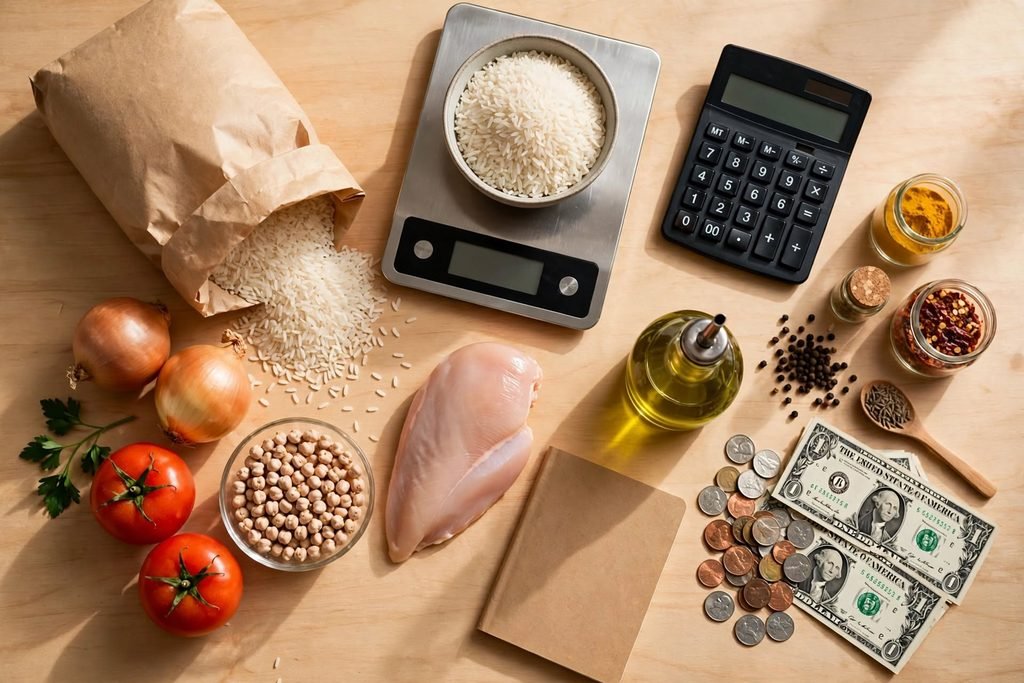
For example, if you purchase a 1,000-gram bag of rice for $4 and use 300 grams, the calculator estimates the rice cost for your recipe as $1.20.
The tool then adds the cost of the other ingredients to calculate:
- Total ingredient cost.
- Additional recipe expenses, if entered.
- Total recipe cost.
- Estimated cost per serving.
These figures can help you compare meals, plan grocery purchases, and make more informed food-budget decisions.
How to Use the Recipe Cost Calculator
Follow these steps to estimate the cost of your recipe:
- Enter the recipe name: This field is optional, but it can help you identify your calculation.
- Enter the number of servings: Specify how many portions the recipe produces.
- Add each ingredient: Enter the ingredient name, such as rice, chicken, vegetables, flour, or olive oil.
- Enter the package price: Use the price you paid for the entire package.
- Enter the package size: For example, 1,000 grams, 500 milliliters, or 2 pounds.
- Enter the quantity used: Specify how much of that ingredient goes into your recipe.
- Select the measurement unit: Make sure the package size and the quantity used use the same unit.
- Add additional costs: If needed, enter other expenses such as packaging or extra recipe costs.
- Calculate: Select the calculation button to view the estimated total cost and cost per serving.
You can add as many ingredient rows as needed and copy the calculation summary for your records.
How to Calculate the Cost of a Recipe
The basic formula is:
Ingredient Cost = Package Price × (Quantity Used ÷ Package Size)
After calculating the cost of each ingredient, add the individual amounts together.
Total Recipe Cost = Total Ingredient Cost + Additional Costs
Finally:
Cost Per Serving = Total Recipe Cost ÷ Number of Servings
For a more detailed explanation of recipe costing, you can consult this U.S. Government guide to computing food costs, which explains how to calculate food costs using ingredient quantities and recipe portions.
Example: Calculating the Cost of a Homemade Meal
Suppose you are preparing a chicken and rice recipe for four people.
| Ingredient | Package Price | Package Size | Quantity Used | Recipe Cost |
|---|---|---|---|---|
| Rice | $4.00 | 1,000 g | 300 g | $1.20 |
| Chicken | $8.00 | 1,000 g | 500 g | $4.00 |
| Olive oil | $7.00 | 500 ml | 30 ml | $0.42 |
| Total | $5.62 |
The estimated cost per serving is:
$5.62 ÷ 4 = $1.41 per serving (rounded).
This is an ingredient-cost estimate based on the example prices and quantities. Your actual grocery costs may be different.
Why Should You Calculate Recipe Costs?
1. Manage Your Grocery Budget
Knowing the approximate cost of meals can help you decide which recipes fit your weekly or monthly food budget. It can also help you compare two meals before choosing what to cook.
Creating a realistic food budget can also help you make better purchasing decisions. For additional guidance, read Penn State Extension’s article on How to Make a Food Spending Plan.
2. Compare Homemade Meals
Preparing food at home can sometimes cost less than purchasing prepared meals, but the result depends on ingredient prices, quantities, waste, and portion sizes. Calculating recipe costs helps you compare options using your own grocery prices. You can also explore these practical tips from Penn State Extension on Eating Healthy on a Budget.
3. Plan Affordable Family Meals
When you know the cost per serving, it becomes easier to plan meals for different household sizes. You can identify affordable recipes and distribute your food budget more deliberately.
4. Reduce Food Waste
Tracking ingredient quantities can help you use what you already have instead of buying unnecessary products. Planning meals around ingredients that can be used in several recipes may also reduce waste.
Important Tips for More Accurate Recipe Cost Calculations
Use the price you actually paid. Grocery prices vary by store, location, brand, package size, and time of purchase. Enter your receipt price instead of relying on a general average.
Use matching measurement units. If a package is measured in grams, enter the recipe quantity in grams. If it is measured in milliliters, enter the amount used in milliliters. Do not compare grams with cups or ounces with milliliters unless you have an appropriate conversion.
Include small ingredients. Cooking oil, spices, sauces, herbs, and garnishes may seem inexpensive, but their combined cost can affect the final estimate.
Consider preparation waste. Some foods lose usable weight when you remove peels, bones, stems, or other parts. The amount purchased may therefore be different from the amount available for cooking. The USDA Food Buying Guide provides useful information about food yields, purchasing quantities, and edible portions.
Use realistic serving sizes. The cost per serving depends on the number of portions the recipe actually produces. If the recipe serves four people rather than six, the calculated cost per serving will change.
Update prices regularly. Ingredient costs can change over time. Review your saved calculations when you notice grocery prices changing.
Recipe Cost vs. Selling Price: What Is the Difference?
Recipe cost is not the same as the selling price of a meal.
The calculator estimates the ingredient cost and any additional expenses you enter. If you sell food, you may also need to account for labor, packaging, rent, utilities, equipment, delivery, taxes, and other business expenses.
For that reason, do not use ingredient cost alone as the final selling price of a food product. A small food business should prepare a broader cost and pricing plan before setting prices.
Make Meal Planning Easier With AffordablyUSA
Calculating recipe costs is one useful step toward organizing your kitchen budget. You can combine this tool with other AffordablyUSA resources:
- Use the Recipe Scaler Calculator to adjust ingredient quantities when changing the number of servings.
- Try the Halal Grocery List Generator to organize ingredients for your shopping trip.
- Read How to Plan Affordable Halal Meals for the Week for practical weekly meal-planning ideas.
- Explore Easy and Affordable Halal Meals to Cook at Home for meal inspiration.
- Learn How to Reduce Food Waste in Your Kitchen to make better use of groceries.
- Read How to Identify Halal Ingredients on US Food Labels when checking packaged food ingredients.
Final Thoughts
Understanding the cost of a recipe does not need to be complicated. By recording package prices, measuring the quantities you use, and dividing the total cost by the number of servings, you can get a useful estimate of what each meal costs.
Use the free AffordablyUSA Recipe Cost Calculator to organize ingredient expenses, compare homemade meals, and make more informed grocery-budget decisions. Remember to update your prices and use consistent measurement units to keep your estimates as accurate as possible.
Frequently Asked Questions
Calculate the cost of each ingredient based on the package price, package size, and quantity used. Add all ingredient costs together, include any additional expenses, and divide the total by the number of servings.
Divide the total recipe cost by the number of servings the recipe produces. For example, if a recipe costs $12 and makes six servings, the estimated cost is $2 per serving.
No. The calculator uses the prices you enter. Grocery prices vary by store, location, brand, and purchase date, so enter your actual prices for a more relevant estimate.
Enter the full package price and package size. Then enter the quantity used in the recipe. The calculator estimates the cost of the portion used rather than charging the entire package price to one recipe.
Yes. You can add multiple ingredient rows and calculate the cost of each item. The calculator adds the individual ingredient costs to estimate the total.
Yes. Enter the ingredients used in your meal-prep recipe and the number of portions it produces. The calculator estimates the total batch cost and the cost per portion.
No. Package size and recipe quantity must use the same measurement unit for each ingredient. For example, enter both quantities in grams or both in milliliters. Weight-to-volume conversions depend on the ingredient and should not be assumed.
The calculator includes ingredient costs and any additional expense you manually enter. It does not automatically estimate labor, electricity, rent, equipment, or other operating expenses.
Yes, it can help estimate ingredient costs and cost per portion. However, a business should also consider labor, packaging, overhead, taxes, and profit before deciding on a selling price.
Update your ingredient prices whenever they change significantly or when you purchase groceries at different prices. Reviewing them regularly helps keep your recipe estimates useful.