
Managing money can feel difficult when prices rise and everyday bills take up a large part of your paycheck. The good news is that saving money does not mean giving up everything you enjoy. Learning how to cut monthly expenses starts with understanding where your money goes, identifying costs you can adjust, and protecting the things your household genuinely needs.

A realistic plan focuses on small changes that add up over time. You might lower a utility bill, reduce food waste, cancel an unused subscription, or find a less expensive phone plan. This guide explains how to cut monthly expenses without sacrificing essentials while keeping your home, health, transportation, and family needs a priority
Review Your Spending Before Making Changes
Before deciding what to cut, get a clear picture of your current spending. Review bank statements, credit card transactions, cash purchases, and automatic payments from the last one to three months.
Group your expenses into categories such as housing, utilities, groceries, transportation, insurance, debt payments, subscriptions, and entertainment.
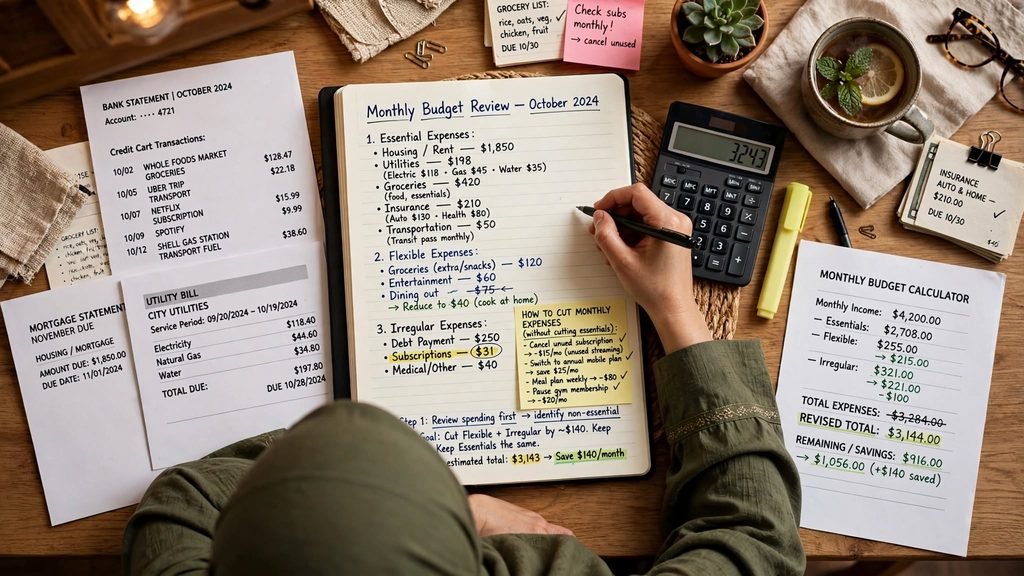
Separate your expenses into three groups:
- Essential expenses: Housing, basic utilities, necessary food, essential medication, insurance, and transportation needed for work or caregiving.
- Flexible expenses: Dining out, entertainment, optional purchases, and clothing beyond immediate needs.
- Irregular expenses: Car repairs, annual fees, school supplies, gifts, and other costs that do not arrive every month.
This review helps you identify patterns instead of guessing. You may discover forgotten subscriptions or realize that takeout costs more than expected.
If you need a structured starting point, use our Monthly Budget Calculator to organize your income and spending.
When deciding how to cut monthly expenses, begin with categories where a change is realistic and unlikely to harm your well-being. Do not start by removing necessary medication, skipping meals, or ignoring bills that protect your housing or safety.
Lower Your Grocery Bill Without Eating Less Well
Food is a regular household cost, but lowering your grocery bill does not have to mean choosing unhealthy meals or going hungry. A weekly meal plan helps you buy what you will actually use and reduces last-minute takeout. One of the most practical ways to learn how to cut monthly expenses without sacrificing essentials is to improve your grocery habits.

Try these practical habits:
- Check your pantry, refrigerator, and freezer before shopping.
- Plan meals around ingredients you already have.
- Compare unit prices instead of looking only at package prices.
- Choose store brands when the ingredients and quality meet your needs.
- Buy perishable foods in quantities your household can finish.
- Prepare extra portions for another meal when practical.
- Make a shopping list and avoid unnecessary impulse purchases.
Coupons are not always a saving if they encourage you to buy something you do not need. Focus on the total cost of meals and food waste rather than chasing every discount.
For a more specific estimate, try our Grocery Budget Calculator. You can also read our guide to the average monthly grocery cost for more food-budgeting ideas.
Reduce Utility Bills With Simple Home Habits
When learning how to cut monthly expenses, electricity, heating, cooling, water, and internet can consume a significant share of a household budget. Start by checking your bills to understand which services cost the most and whether usage changes by season.
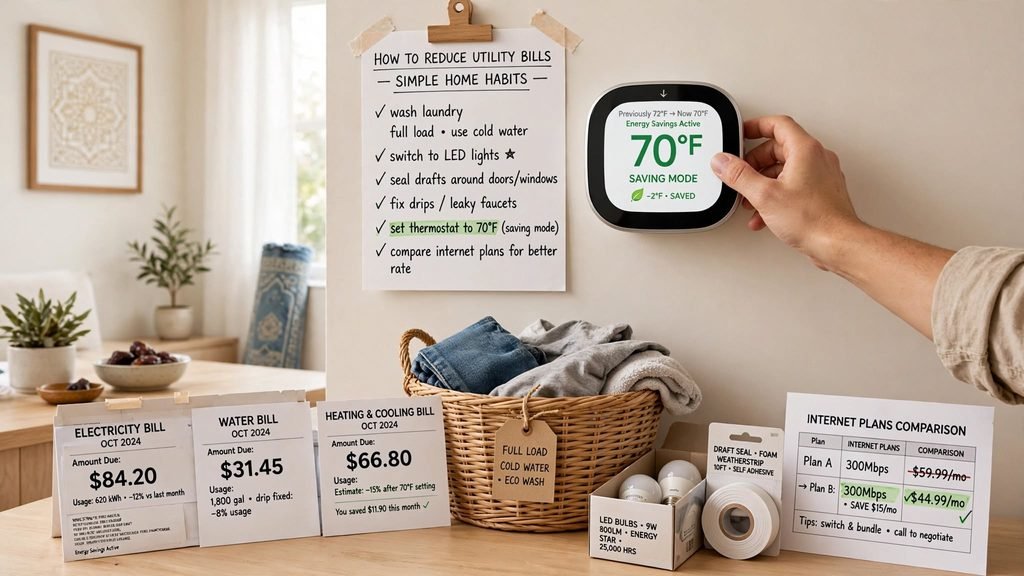
Possible ways to save include:
- Turn off lights and electronics when they are not needed.
- Use LED bulbs when replacing older bulbs.
- Wash full loads of laundry and use cold water when appropriate.
- Fix dripping faucets and report leaks promptly.
- Adjust heating and cooling settings to a comfortable, energy-conscious level.
- Seal obvious drafts around doors and windows where practical.
- Compare internet plans and ask your provider about lower-cost options.
Avoid spending a large amount on upgrades just to save a small amount each month unless the numbers make sense. If you rent, ask your landlord before changing fixtures or equipment.
A useful strategy for how to cut monthly expenses is to make one or two changes first, then compare your next bill with a similar month. Weather and seasonal usage can affect the results.
Cancel or Downgrade Unused Subscriptions
Subscription charges can be easy to overlook because they often renew automatically. Review your bank statements and app-store subscriptions for streaming platforms, memberships, software, delivery services, and other recurring payments.
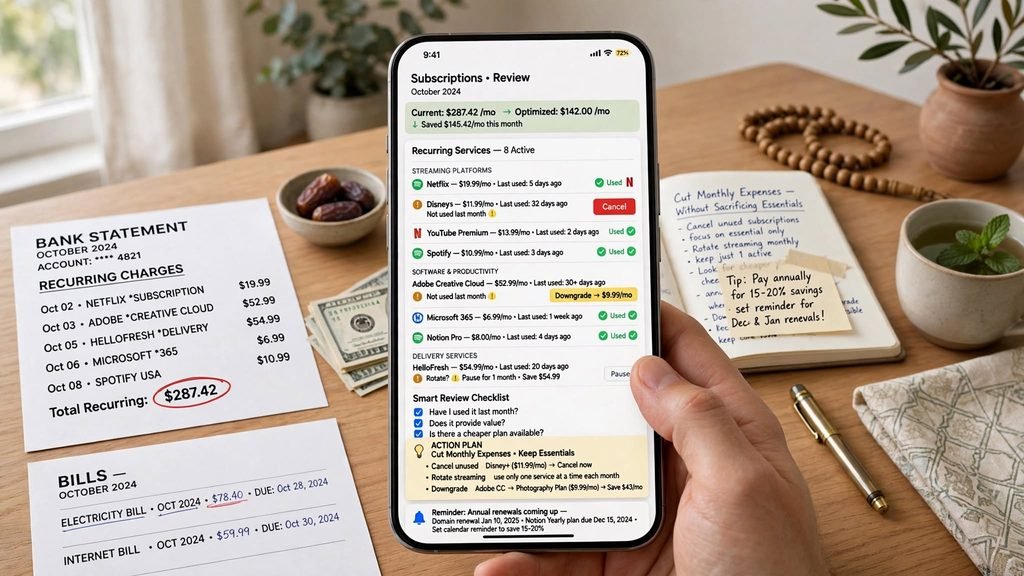
Ask yourself three questions about each service:
- Have I used it in the last month?
- Does it provide enough value to justify the cost?
- Is there a cheaper plan that still meets my needs?
Cancel services you no longer use, rotate entertainment subscriptions instead of keeping all of them active, or downgrade to a plan with fewer features.
Check cancellation terms and the next billing date before making changes. If a service is shared with family, discuss the decision first so you do not accidentally remove something important to someone else.
Do not overlook annual renewals. Set a reminder before a yearly membership or software plan renews so you have time to decide whether to keep it.
Small recurring payments can add up over a year, but the goal is to remove low-value costs—not every enjoyable activity.
Compare Phone, Internet, and Insurance Plans
Some bills can be reduced by comparing providers or asking for a better plan. Review your mobile phone, internet, insurance, and other recurring service costs at least once a year, or whenever your circumstances change.
Before switching, compare the total cost—not only the advertised monthly price. Check activation fees, equipment charges, deductibles, coverage limits, contract length, and the price after a promotional period.
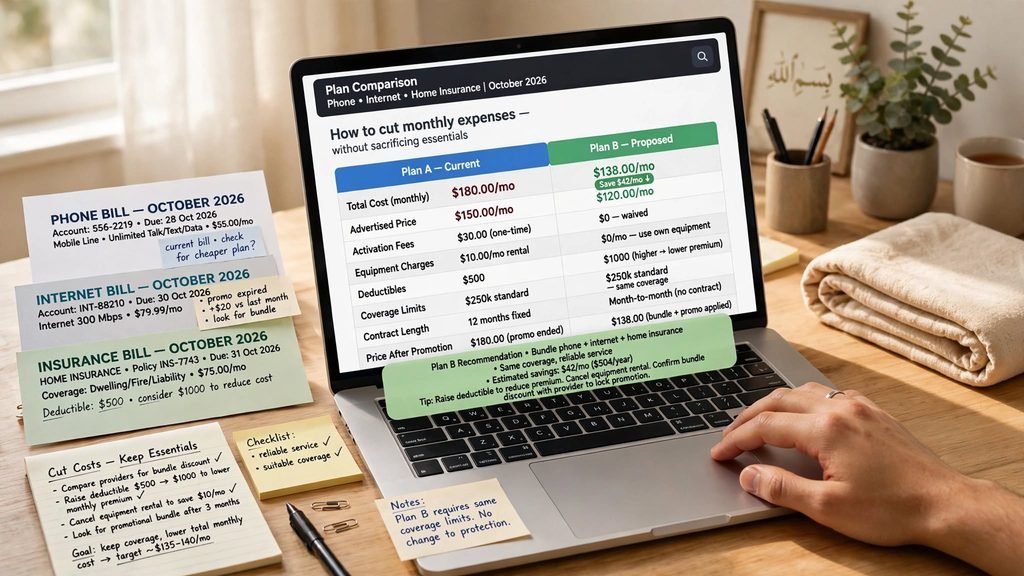
For insurance, do not reduce essential coverage without understanding the risks and any legal or lender requirements.
You can contact your current provider and ask whether a less expensive plan is available. Explain that you are reviewing your budget and want to learn about eligible discounts or alternatives. Keep notes of quoted prices and read the final terms before agreeing.
The cheapest offer is not always the best option. Reliable service and suitable coverage may be worth paying for, especially when a problem could affect your work, health, home, or family.
Save on Transportation Without Risking Safety
When planning how to cut monthly expenses, transportation costs may include fuel, public transit, parking, maintenance, insurance, and car payments. Start by tracking the total monthly cost of getting where you need to go.
If practical, combine errands into one trip, keep tires properly inflated according to the vehicle manual, and follow the recommended maintenance schedule. Regular maintenance can help avoid some costly problems, although it cannot prevent every repair.
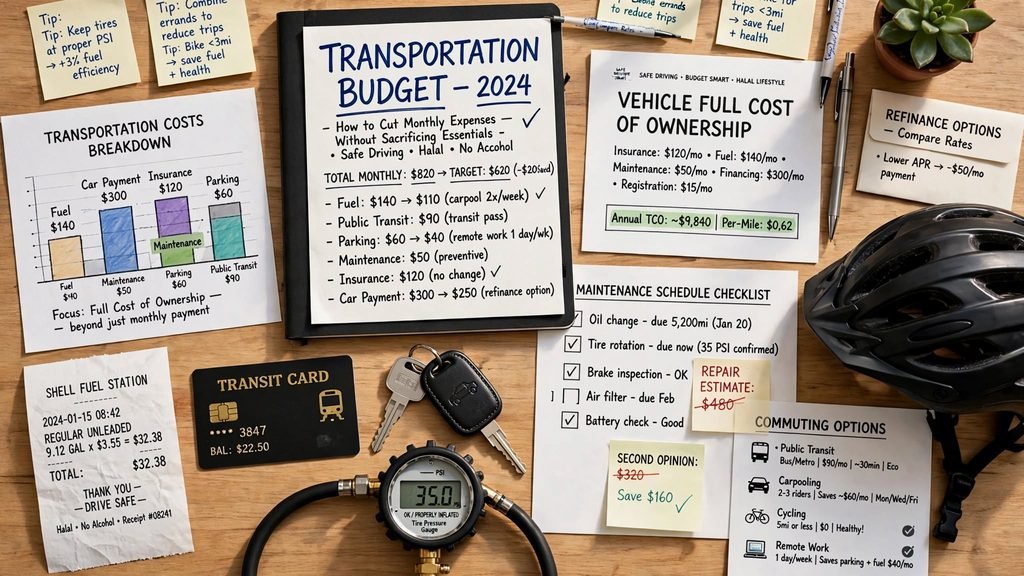
Ask for an estimate before authorizing non-emergency repairs. For expensive work, consider getting a second opinion.
For commuting, compare the cost and time of public transit, carpooling, cycling, or working remotely when those options are safe and available. Avoid delaying safety-critical repairs just to save money. A lower monthly cost is not worth risking an accident or losing access to work.
If you are considering replacing a vehicle, compare the full cost of ownership—including insurance, fuel, maintenance, financing, and registration—rather than focusing only on the monthly payment.
Plan for Irregular Costs Before They Become Emergencies
Some expenses are predictable even if they do not occur every month, and planning for them is a key part of how to cut monthly expenses without sacrificing essentials.
When these costs arrive unexpectedly, people may rely on credit cards or use money needed for other bills.
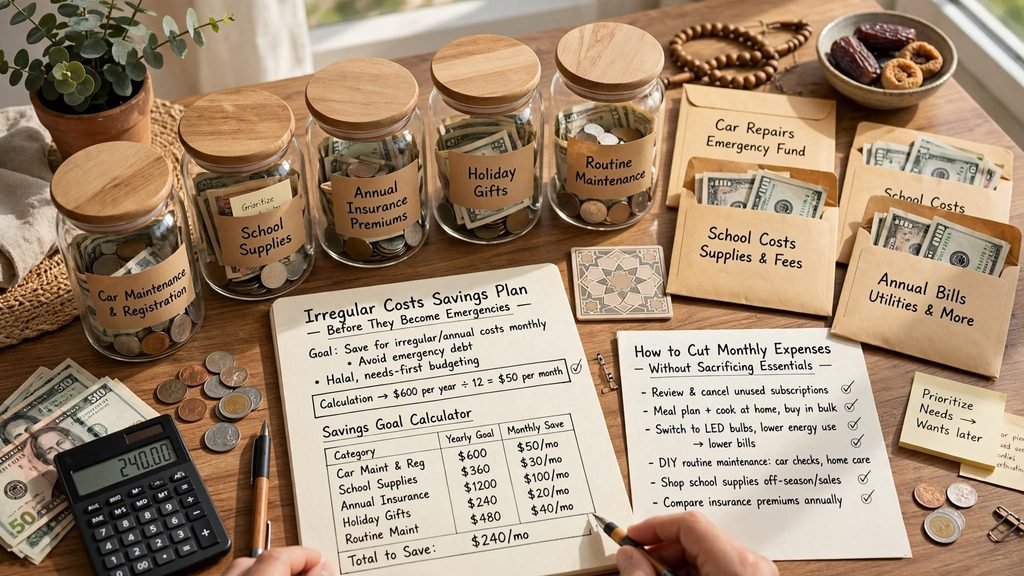
Estimate the yearly cost of each irregular expense and divide it by 12. For example, if you expect to spend $600 on car maintenance and registration over a year, setting aside $50 per month can help prepare for that cost.
The estimate will not always be exact, but it gives you a useful starting target.
Create separate savings categories if that helps you keep the money organized. Even a small amount set aside regularly can reduce the pressure when a bill arrives. If your income changes from month to month, base your plan on a conservative estimate and add more during higher-income months when possible.
Use our Savings Goal Calculator to estimate how much to set aside and how long it may take to reach your target.
Build a Budget That Protects Your Essentials
A budget is most useful when it reflects your real life, and it shows you how to cut monthly expenses without sacrificing essentials. List your take-home income and subtract essential bills, minimum debt payments, and planned savings. Then decide how much is available for flexible spending.
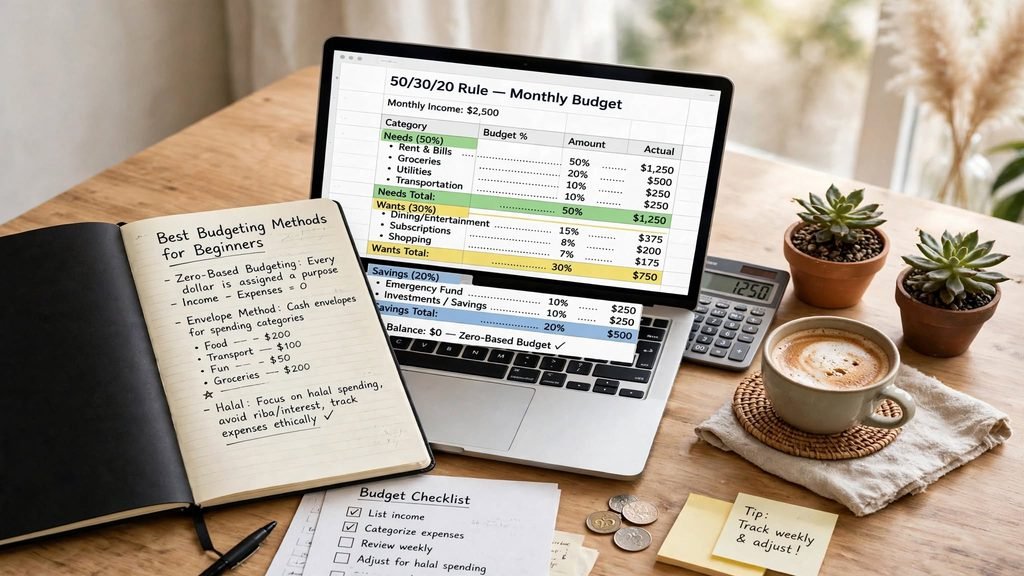
Some people find the 50/30/20 guideline helpful: around 50% of take-home pay for needs, 30% for wants, and 20% for savings and debt repayment. It is a guideline, not a rule that every household can follow.
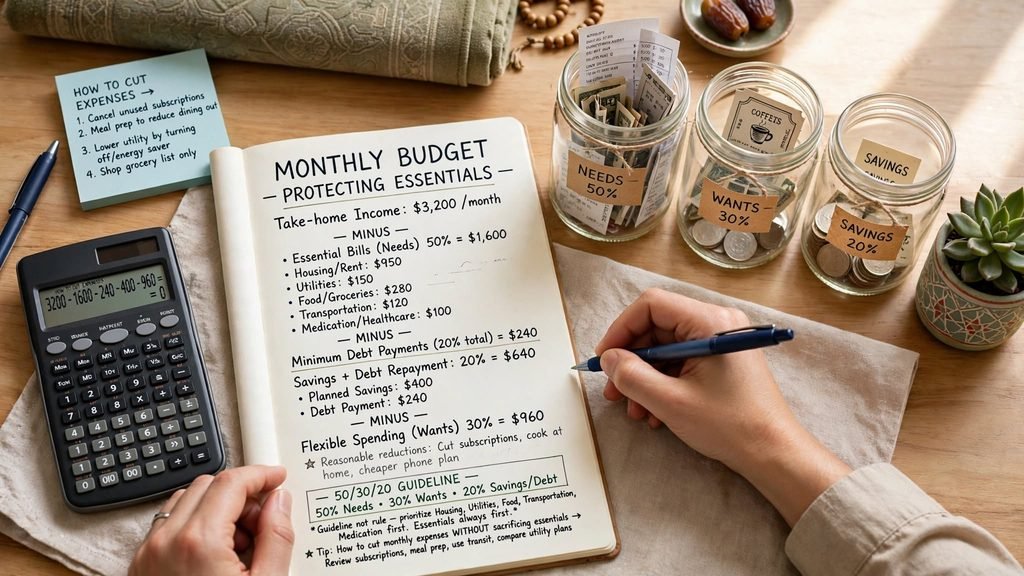
High housing costs, low income, medical needs, or family responsibilities may make those percentages unrealistic.
Prioritize housing, utilities, food, necessary transportation, medication, and other essential needs first. Then look for reasonable reductions in flexible spending. If your expenses exceed your income even after careful adjustments, the problem may not be a lack of discipline; your income or fixed costs may simply leave too little room.
Our guide on how to create a monthly budget explains how to build a plan, and the Monthly Budget Calculator can help you test different spending amounts.
Avoid Cuts That Cost More in the Long Run
Not every reduction is a good saving. Skipping preventive care, ignoring a leaking pipe, delaying necessary vehicle repairs, or buying low-quality items that need frequent replacement may create larger costs later.
Before making a cut, consider the possible consequences. Will it affect your health, safety, ability to work, or housing stability? Is there a lower-cost alternative that still meets the need? Could a short-term saving lead to a larger bill later?
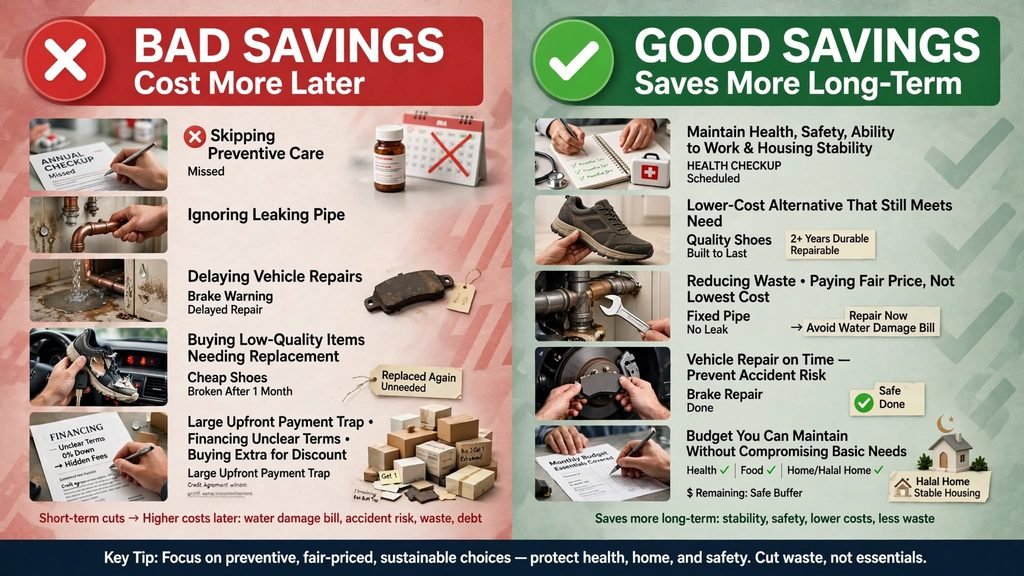
Be cautious with deals that require a large upfront payment, financing with unclear terms, or buying extra items to qualify for a discount. A discount only saves money when the purchase is useful and affordable.
When considering how to cut monthly expenses, focus on reducing waste and paying a fair price—not simply choosing the lowest possible cost for everything. Your goal is a budget you can maintain without compromising basic needs.
Make a Simple 30-Day Expense-Reduction Plan
Trying to change every spending habit at once can feel overwhelming. This simple 30-day plan makes how to cut monthly expenses more manageable. Instead, choose a few actions and review the results after one month. Week 1: Understand your spending. Review recent transactions, list recurring bills, and identify the three categories with the most room for improvement.
Week 2: Make easy adjustments. Cancel one unused subscription, plan meals before grocery shopping, and contact one provider to ask about a lower-cost plan.
Week 3: Reduce waste. Track food that gets thrown away, electricity habits, transport spending, and impulse purchases. Keep changes that are realistic for your household.
Week 4: Review the results. Compare your spending with the previous month, accounting for unusual bills or seasonal changes. Decide which changes to continue and set a modest next goal.
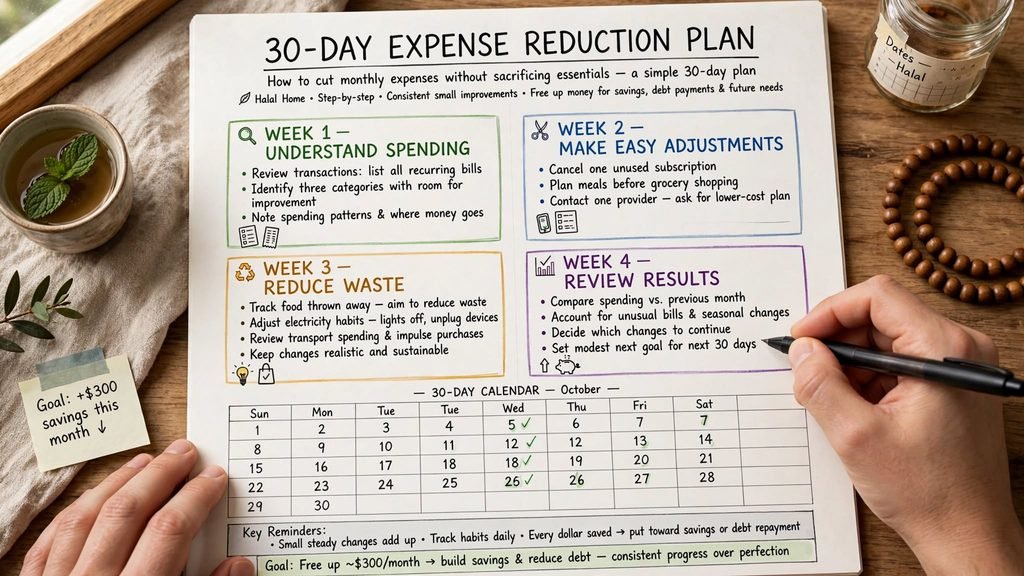
This step-by-step approach makes how to cut monthly expenses feel more manageable. You do not need a perfect month to make progress. Consistent improvements, even small ones, can free up money for savings, debt payments, or future needs.
Helpful Budgeting Resources and Tools
Reliable information can make financial planning easier. The following resources offer additional guidance.
Consumer Financial Protection Bureau Explore budgeting information and practical resources for managing money.
USA.gov: Managing Your Money Find official government information that can help you navigate personal financial matters.
FDIC: Money Smart Access financial education resources designed to help people make informed money decisions.
You can also use these free tools on AffordablyUSA to put your plan into practice:
Monthly Budget Calculator Organize your income, needs, wants, and savings.
Savings Goal Calculator Estimate how much to save regularly to reach a target.
Grocery Budget Calculator Plan food spending based on your household and shopping habits.
For more practical guidance, explore these related articles in the AffordablyUSA Budget & Money-Saving section:


Final Thoughts
Learning how to cut monthly expenses is about making deliberate choices, not eliminating everything that makes life enjoyable. Start with a clear picture of your spending, protect essential needs, and look for practical changes in groceries, utilities, subscriptions, services, and transportation.
Prepare for irregular costs and review your progress each month. Choose two or three actions you can begin this week. Once those habits feel manageable, add another change. A flexible budget that fits your real life is more likely to help you save money over the long term than a strict plan you cannot maintain.
Small changes today can create more financial breathing room tomorrow.
Frequently Asked Questions
Start by reviewing recent bank statements and listing recurring payments. Cancel subscriptions you do not use, plan groceries, and compare one or two service bills. Begin with changes that are simple to maintain and do not affect essential needs.
Prioritize housing, utilities, food, necessary transportation, medication, and required payments. Look for flexible costs you can reduce, ask providers about eligible lower-cost plans, and check whether local assistance programs are available. If essentials already use all your income, small spending cuts may not be enough on their own.
There is no single amount that works for everyone. Start with an amount that fits your income and essential bills, even if it is small. As your situation improves, you can increase it. A realistic plan is more useful than a target that forces you to miss necessary payments.
Not necessarily. Focus on services you rarely use or that cost more than the value they provide. Keeping a modest amount for enjoyment can make your budget easier to follow over time.
No. It is a flexible guideline, not a requirement. If housing or other essential costs are high compared with your income, you may need different percentages. Choose a budget that reflects your actual circumstances.
A quick review each week can help you stay aware of spending, while a more complete review once a month lets you compare bills and adjust your plan. Revisit your budget after major changes in income, housing, family needs, or transportation.
If essential expenses already exceed your available income, consider whether you qualify for community assistance, utility support, food assistance, or nonprofit financial counseling. Review whether any payment arrangements are available before missing a bill. Sometimes the solution requires more income or support rather than additional cuts.